

Guides
Paper finishes explained
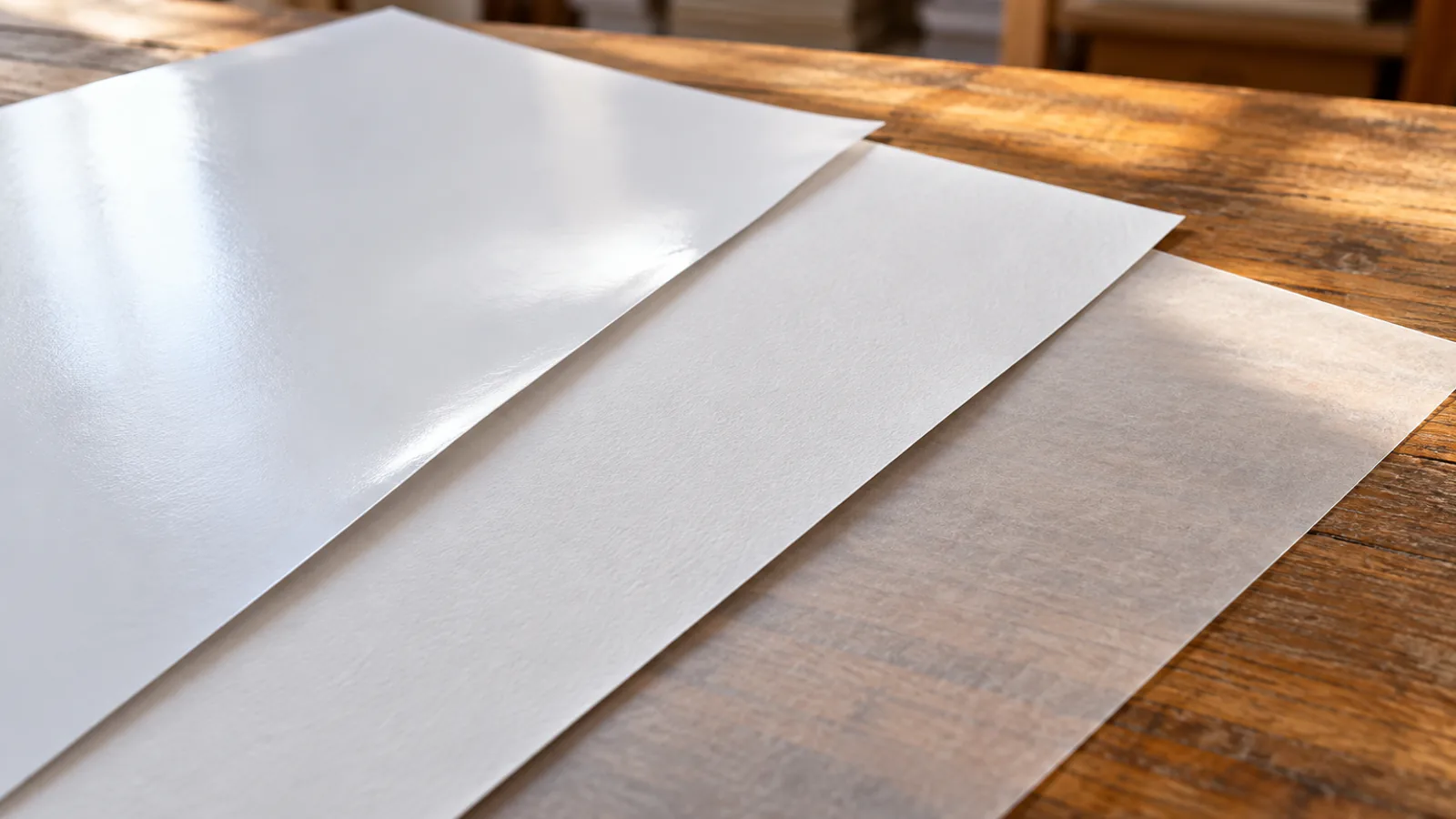
A finish is what the mill does to the surface of a paper. The finish decides how the sheet prints, releases and handles.
01 / The idea
What a finish does
Two papers share a fibre and a weight and still behave differently, because the mill treated the surface differently.
Glazing against a cylinder, smoothing in-line, coating with silicone, making the sheet dense enough to hold oil back, and bleaching all change the surface. Each change suits a different job.
Pick the finish for the job first. Then pick the grade carrying the finish, and the weight last.
02 / Our range
Finishes across the KEIKO PAPERS range
| Machine-glazed, one side | White MG, brown MG |
|---|---|
| Machine-finished, both sides | White MF |
| Greaseproof, uncoated | White OGR, brown OGR |
| Butter paper types | Silicone-coated, vegetable parchment, greaseproof uncoated |
| Strong, unbleached | Kraft |
| Strong, bleached | Bleached kraft |
03 / MG
Machine-glazed (MG)
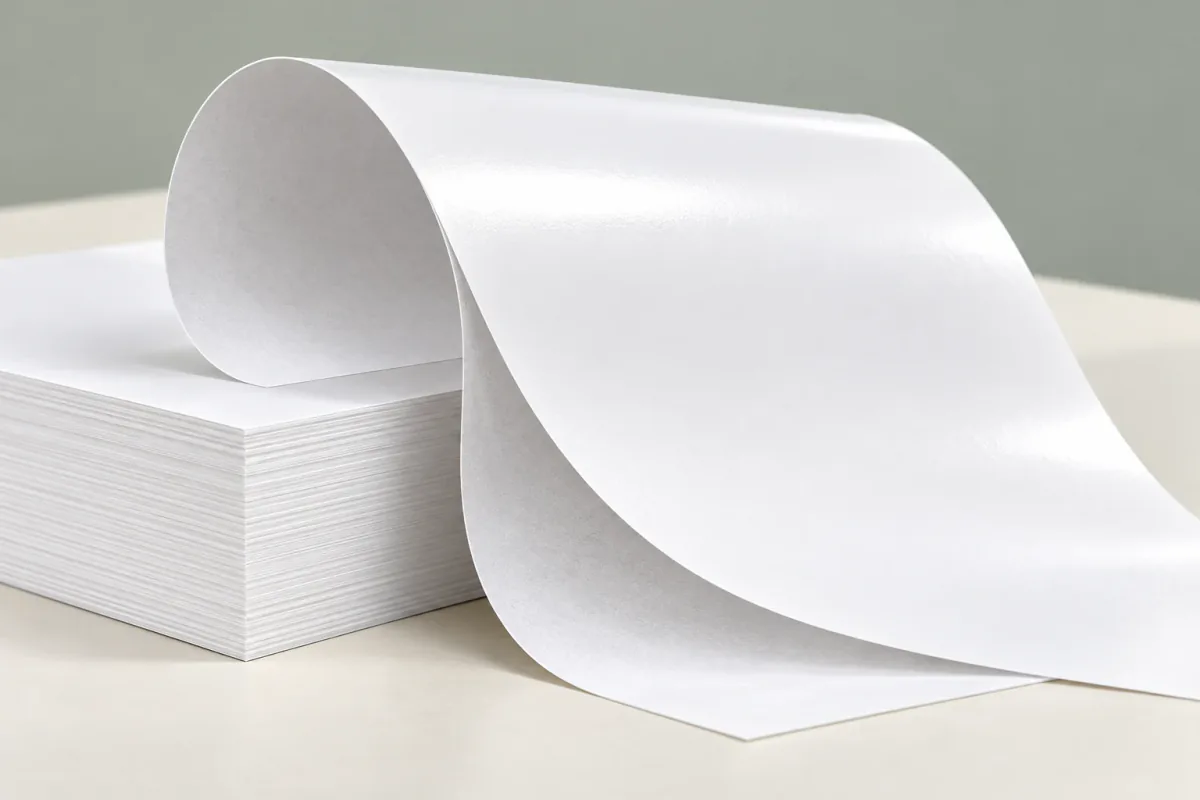
Machine glazing happens at the drying stage. The mill presses the wet web against a large polished cylinder. The side in contact comes away closed and glossy, and the reverse dries open and matte. One pass gives two different surfaces.
The glazed face is the printing side. Choose MG when the sheet carries print or needs a finished look: printed wrap, carry bags, liners and retail packing.
Brown MG and white MG share the same construction. Ink on brown shifts towards the base shade, so white MG gives the better ground for colour accuracy.
04 / MF
Machine-finished (MF)
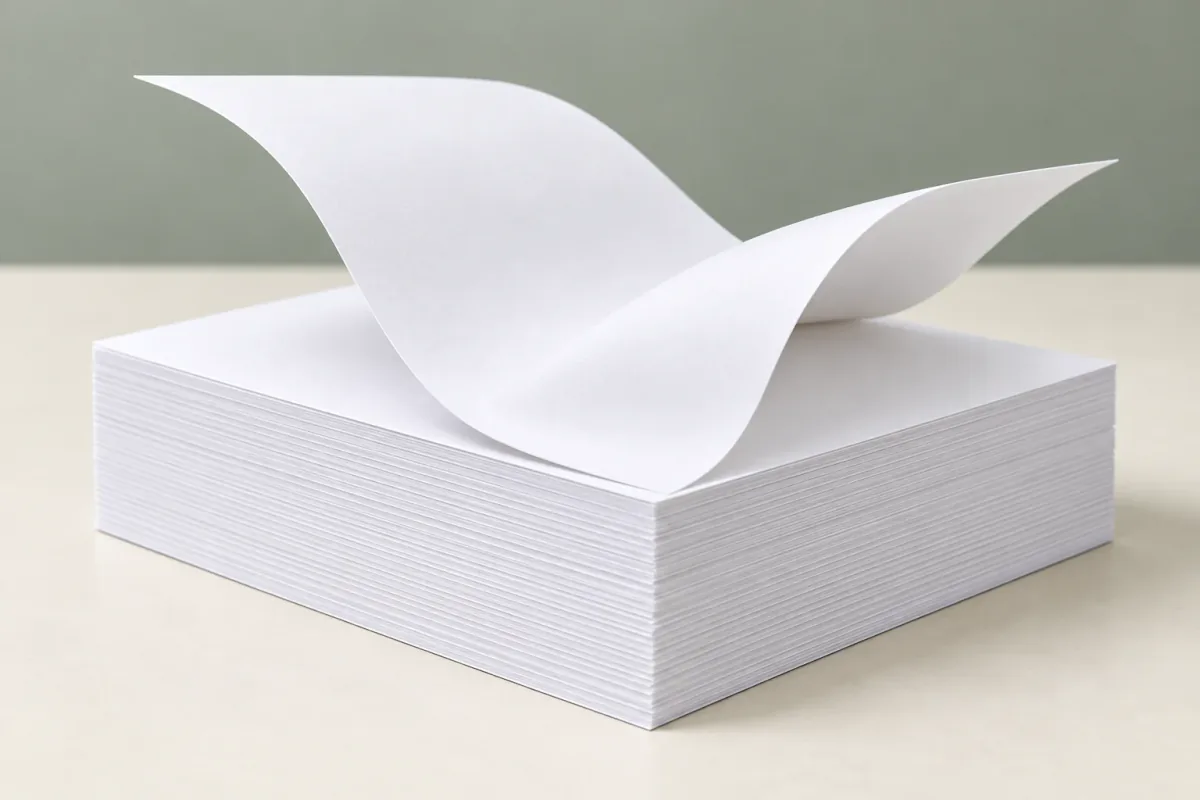
Machine finishing smooths the sheet in-line during making, with no glazing cylinder. The result is even on both faces, with no printing side and no reverse.
This symmetry makes MF the default across mixed work. No orienting the web, and no rejected run from feeding the wrong side.
MF takes print, but a glazed MG face holds finer detail. White MF is not for direct food contact.
05 / OGR
Greaseproof (OGR)
OGR stands for oil and grease resistant. An ordinary sheet absorbs fat and darkens through. An OGR sheet holds a barrier, so the wrap still looks clean on arrival.
Our OGR is greaseproof without a coating: dense enough to hold oil back. White and brown share the same grade, in 35, 45, 55, 65 and 70 GSM.
Suppliers rate grease resistance with a KIT value from the TAPPI T 559 test. We do not publish KIT values for our OGR yet, so test samples with your own food.
06 / Butter paper
Butter paper types
Our butter paper comes in three types: silicone-coated, vegetable parchment and greaseproof uncoated. Rolls, bulk reels and sheets come in all three.
The silicone-coated type is rated to 230 °C, so order this type for oven work. We make no oven claim for vegetable parchment or greaseproof uncoated.
All three give the clean release butter paper is bought for: lay the sheet on the tray, and the bake comes off without sticking.
07 / Shade
Bleached and unbleached
Bleaching is a finishing choice made on top of a grade. Brown OGR is the same grade as white OGR, with the bleaching step skipped. Grease performance stays the same.
Kraft works the same way. The long-fibre base does the structural work in both kraft grades. Bleached kraft adds a clean white surface for packs your customer sees, and plain kraft is the more economical choice out of sight.
Unbleached stock carries some natural shade variation between batches. We flag a batch change before the order ships.
08 / Choosing
Pick a finish by job
Machine-glazed MG, white for colour accuracy.
Machine-finished white MF.
Greaseproof OGR, white or brown.
Silicone-coated butter paper, rated to 230 °C.
Bleached kraft.
Plain kraft.
09 / Testing
Judge a finish in your own hands
A finish reads differently on a screen than on a bench. Shade and hand vary between mills, so judge the sheet in your own light.
Ask for swatches of two finishes side by side. Print a test on MG and MF, wrap your food in OGR, line a tray with butter paper. Then pick.
10 / Further reading
Where to go next
The pages in this guide compare the finishes head to head: MF against MG, white MF against white MG, and bleached kraft against kraft. Our glossary explains slitting, the step turning a wide reel into the width you order.
11 / Print
Finish and print
Print wants a closed, smooth face. A machine-glazed face takes ink cleanly and gives a finished look, which is why printed wrap, bags and branded packing end up on MG.
The base shade changes the colour. Ink on brown shifts towards the base shade. On a bright glazed white, ink lands closer to your proof.
MF takes print on either side, with less fine detail than a glazed face. For colour work and presentation, start with white MG.
Send your artwork and print process with your enquiry, and we will advise which finish suits the job.
12 / Food
Finish and food contact
Butter paper and OGR are our food grades. Butter paper gives clean release. OGR holds a barrier against oil.
White MF is not for direct food contact. Kraft is not for direct food contact. For MG and bleached kraft, ask us before food use.
Tell us what the paper will touch, and we tell you which grades are cleared for the job and what the mill certifies.
13 / Formats
Formats by finish
MG and MF come on reels from 500 to 1,500 mm wide and 1,500 to 4,000 m long, and as 500×700 and 700×1,000 mm sheets, from 1 tonne per GSM and width.
OGR comes on reels from 300 to 1,200 mm wide, slit to order, and as 300×400, 400×600 and 500×700 mm sheets, from 500 kg per GSM and size.
Kraft and bleached kraft come on reels from 600 to 1,800 mm wide and as 700×1,000 and 900×1,200 mm sheets, from 1 tonne per GSM and width.
Butter paper comes on retail rolls, bulk reels and pre-cut sheets, in all three types.
14 / Mixing
Using two finishes together
Many packs combine finishes. A garment unit interleaves with white MF and prints retail bags on white MG. A bakery lines trays with butter paper and wraps fried items in OGR. A dispatch room fills cartons with kraft and wraps show pieces in bleached kraft.
Order swatches of each finish together, so you judge them side by side on the same bench.
On this topic
Every page in this guide
Glossary
- Converting
Converting turns parent reels and sheets of paper into finished products such as bags, labels and wraps. See the main processes and what a converter orders.
- Core diameter
Core diameter is the inside diameter of the tube a paper roll winds on. See common core sizes, why the core must fit your machine, and what to tell us.
- Interleaving
Interleaving puts thin paper between stacked layers of product so they separate cleanly. See where you interleave and which grade suits food and non-food.
- Jumbo roll
A jumbo roll is a large parent reel of paper, slit and rewound into smaller rolls. See how a jumbo roll compares with retail rolls and bulk reels.
- Slitting
Slitting cuts a wide paper reel lengthwise into narrower reels. See how a slitter rewinder works and how to order a reel slit to your width.
Comparisons
- Bleached kraft vs kraft paper
Kraft and bleached kraft share a long-fibre base, the same weights and formats. Bleached kraft adds a clean white surface for packs your customer sees.
- Bleached kraft vs white MG paper
Both papers are white. Bleached kraft is a strength grade for packing. White MG is a glazed printing surface. Compare the two and pick the right white sheet.
- Brown MG vs white MG paper
Brown and white MG share one glazed construction, the same weights and the same MOQ. Compare print colour, look and uses, and pick the shade for your job.
- Butter paper vs MF paper
Butter paper is a food-contact liner. White MF is a general commercial sheet, not for direct food contact. Compare jobs, weights, formats and order sizes.
- Kraft paper vs MG paper
Plain kraft is the strength grade. MG kraft adds a glazed face for print. Compare weight, finish, formats and uses, and when plain kraft is the better buy.
- MF paper vs MG paper
MG paper is glazed on one side for print. MF paper is machine-finished, even on both sides. See how each finish is made and when to choose each.
- White MF vs white MG
White MG gives a bright glazed face for print. White MF is even on both sides for general work. Compare finish, print, formats, MOQ and food contact.
Questions
Before you specify
Which finish takes print best?
A machine-glazed face. Of our grades, white MG gives the best colour fidelity.
Is OGR paper coated?
Our OGR is greaseproof without a coating. The sheet is dense enough to hold oil back.
Which butter paper type goes in the oven?
The silicone-coated type, rated to 230 °C. We make no oven claim for vegetable parchment or greaseproof uncoated.
What is the difference between MG and MF?
MG is glazed on one side against a polished cylinder, for print. MF is machine-finished, even on both sides, for general work.
Does bleaching change the strength of kraft?
Bleached kraft remains a kraft-base packing grade, chosen for strength. Where a job is purely structural and unseen, plain kraft is the more economical choice.