

Guides
Butter paper: the complete guide
In India, butter paper is the light, translucent, food-grade sheet kitchens use to line trays, wrap food and separate layers. The name covers three types, and only one of them belongs in a hot oven.
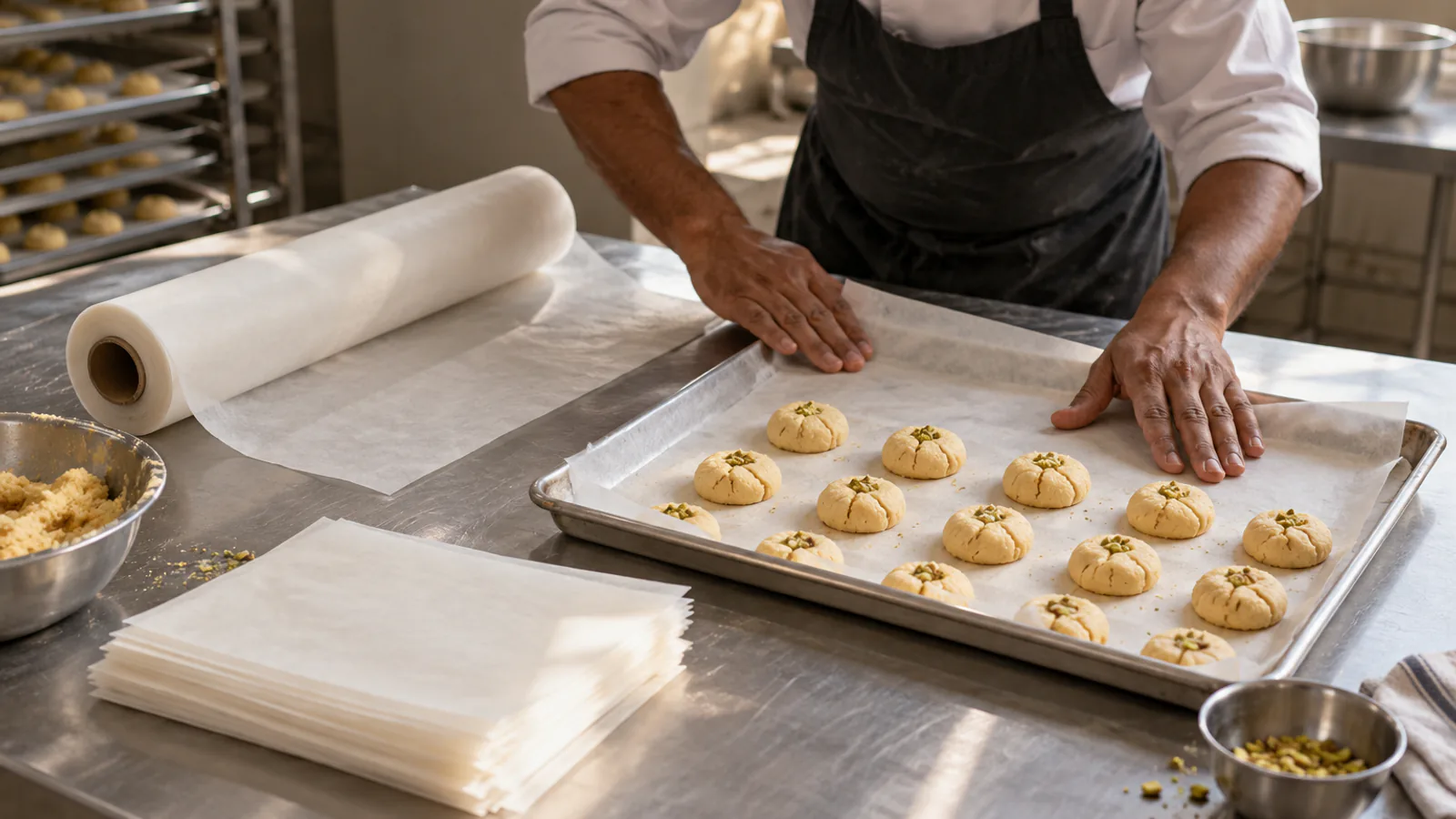
01 / The paper
What butter paper is
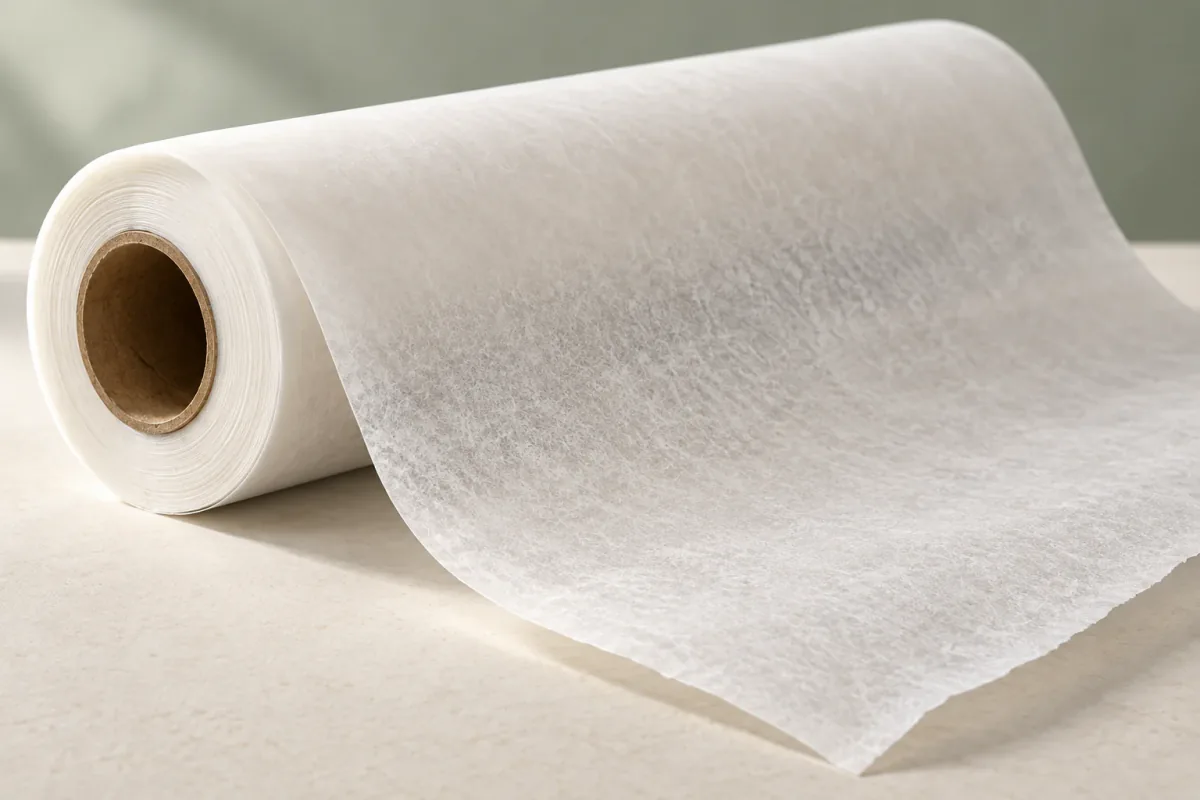
Butter paper is a light food paper, usually between 35 and 50 GSM. Hold a sheet to the light and you see through the sheet. Lay the sheet on a tray and food lifts off cleanly.
Indian kitchens use the name for a family of papers. Recipes from abroad call the same papers baking paper, parchment paper or greaseproof paper. Read the type, not the name, before you buy.
02 / The name
Why the name is butter paper
Butter is fat, and fat soaks through plain paper. Mills make grease-resistant papers for wrapping butter and other fatty foods.
In India, the name stuck to the whole class of light, grease-resistant food sheets, whether the sheet wraps butter or lines a cake tin.
03 / The types
The three types of butter paper
| Silicone-coated | Paper with a silicone release coating. Rated to 230 °C. The type for ovens. |
|---|---|
| Vegetable parchment | A treated paper with no coating, known for a natural grease barrier and wet strength. No oven rating published. |
| Greaseproof uncoated | A dense sheet treated to resist fat, with no coating. No oven rating published. |
04 / Made of
What butter paper is made of
Every type starts as paper made from wood fibre. The difference is the step after the paper machine.
Silicone-coated paper carries a thin silicone layer on the surface. The silicone gives the release and the heat resistance.
Vegetable parchment is paper treated so the surface fibres fuse. Mills describe the result as a pure cellulose sheet with no coating.
Greaseproof paper is formed dense and closely, then treated at the size press with starches or similar agents to resist fat.
05 / Uses
What butter paper is used for
Clean release off the tray with no greasing. Use the silicone-coated type in a hot oven.
Lining serving and bakery trays
Pre-cut sheets matched to your trays, so every tray looks the same.
A light wrap for tiffins, counters and takeaway.
Squares between patties, slices and parathas, so each layer lifts off cleanly.
A clean sheet under mithai in the box.
Dry items in butter paper, oily items in OGR.
06 / Heat
Butter paper in the oven, OTG and air fryer
Our silicone-coated butter paper is rated to 230 °C. An OTG is an oven, so the same limit applies. We make no oven claim for vegetable parchment or greaseproof uncoated.
In an air fryer, keep the sheet under food and away from the heating element, and never run the fryer with a loose sheet inside.
We have not tested our butter paper in a microwave, so we make no microwave claim. Our temperature page sets out each limit in one table.
07 / Weight
Butter paper GSM
Our butter paper runs from 35 to 50 GSM. Across our ranges, lighter GSM suits wrapping and high volume. Heavier GSM suits handling and heavier product.
For butter paper, this puts 35 GSM towards wrapping and interleaving, and 50 GSM towards tray lining, where the sheet takes more handling.
08 / Formats
Rolls and sheets
| Roll widths | 300, 380, 450, 600, 900, 1,200 mm |
|---|---|
| Roll lengths | 25–100 m retail · 500–2,000 m bulk reels |
| Sheet sizes | 300×400, 380×500, 450×600, 500×700 mm, plus custom sizes on bulk orders |
| MOQ | 1 retail roll · 250 kg per width and GSM in bulk · 10,000 sheets per size and GSM |
| Lead time | In-stock rolls 2–5 working days · custom reels 3–5 weeks · sheets 2–4 weeks after size approval |
| Origin | Imported from the US and UK |
09 / Choosing
Rolls or sheets
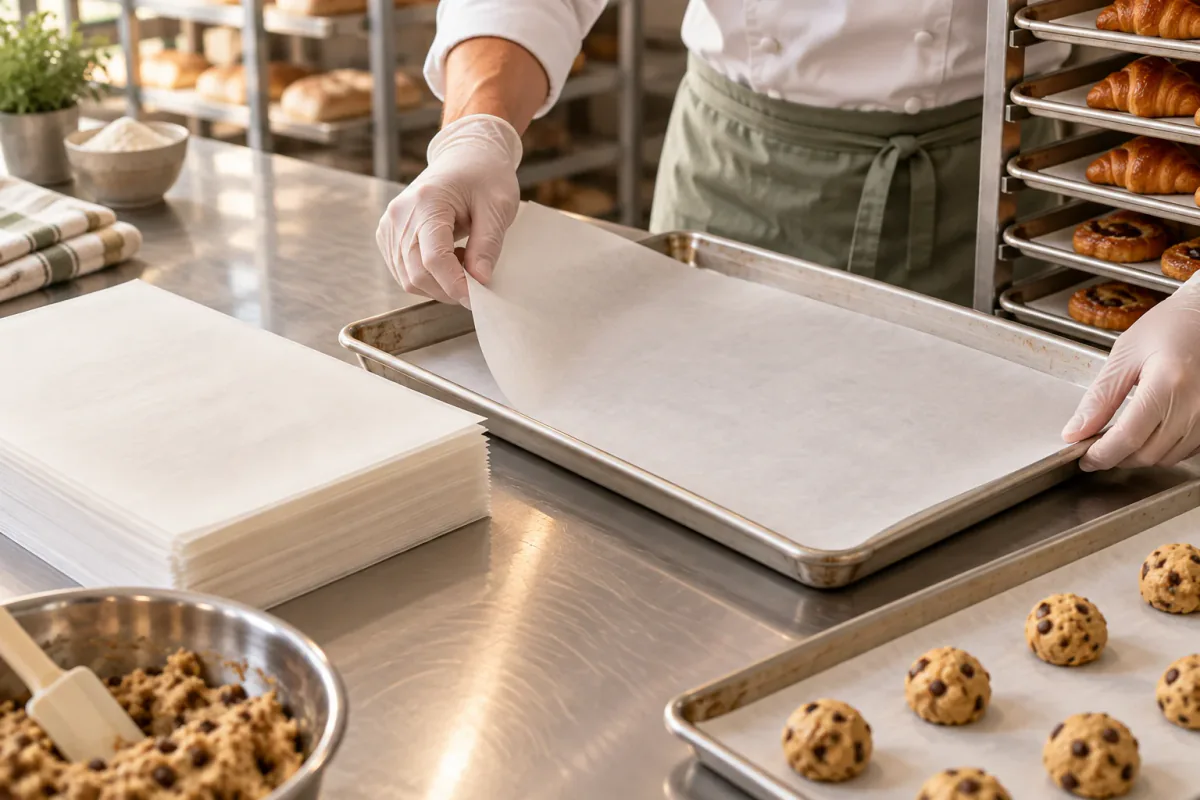
Rolls win on mixed sizes. You pull the length your tray needs and cut, so one roll serves every tray in the kitchen.
Sheets win where one size repeats all day. The cut happens at our end, so every sheet matches and you lose no time squaring up a roll.
10 / Other papers
Butter paper against other kitchen papers
Against OGR: choose butter paper when release is the problem, OGR when oil is. OGR holds a barrier against oil and grease for fried and oily food.
Against wax paper: wax paper smokes in an oven. Keep wax paper for cold wrapping and use silicone-coated butter paper for heat.
Against parchment paper: silicone-coated butter paper is the paper most recipes call parchment or baking paper.
11 / Business buying
Buying butter paper for a business
Start with the job, then the type, then the format. A bakery lining trays in a hot oven needs the silicone-coated type. A counter wrapping rotis needs no oven rating.
Bulk rolls start at 250 kg per width and GSM, and sheets at 10,000 per size and GSM. Each extra width or size adds a line with its own minimum, so keep the number of sizes low.
Ask for samples before a first order in a new type. Test them on your own trays and food, then record the type, GSM and size on your specification sheet.
12 / Home kitchens
Buying butter paper for a home kitchen
KEIKOwrap is our retail range for home kitchens. Every KEIKOwrap roll is silicone-coated and rated to 230 °C, in single rolls and multi-roll packs.
For a home oven, buy the silicone-coated type. For wrapping rotis and sandwiches, any food-grade type does the job.
13 / By trade
Butter paper by trade
Bakeries line trays and tins with the silicone-coated type, on bulk reels or pre-cut sheets, and wrap counter items.
Sweet shops line mithai boxes with pre-cut sheets and move ghee-heavy sweets onto OGR.
Caterers wrap portions in pre-cut sheets and stack rotis and parathas with a sheet between each layer.
Restaurants and hotels line trays in the bakery, wrap dry takeaway items and separate portions in the cold room.
14 / Food contact
Keep the food line food-grade
All three of our butter paper types are food-grade stock. Our white MF and plain kraft are not for direct food contact, so keep those papers off the food line.
Newspaper is never a food paper. In June 2026, the Western Region of FSSAI directed food businesses to stop using newspaper for packing or serving food.
15 / After use
Reuse and disposal
Kitchens often reuse a sheet across dry bakes. Your kitchen makes this call. We make no reuse claim.
Once done, the paper is recyclable. Scrape off food first.
On this topic
Every page in this guide
Guides
- Butter paper alternatives
Out of butter paper? See how foil, cling film, wax paper, greasing and OGR compare for lining, baking and wrapping, and what to keep out of the oven.
- Butter paper for roti
How to wrap roti and chapati in butter paper for tiffins, counters and takeaway. Which type to pick, which roll width or sheet size, and how much to order.
- How much butter paper a bakery uses
Work out how much butter paper your bakery uses per day, per roll and per order. A worked example on real roll lengths, widths, sheet sizes and MOQs.
- How to line a baking tray
Step-by-step lining for baking trays, cake tins and loaf tins, which butter paper type goes in the oven, and how to match sheet sizes to trays.
Comparisons
- Butter paper vs parchment paper
In India, butter paper covers three types, and one is the parchment or baking paper recipes ask for. Compare coating, oven rating, uses and butcher paper.
- Butter paper vs wax paper
Wax paper is coated with wax and smokes in an oven. Silicone-coated butter paper is rated to 230 °C. Compare coating, heat, grease and best jobs.
Specifications
- Butter paper temperature limit
Silicone-coated butter paper from KEIKO PAPERS is rated to 230 °C. See the limit for each type, and our position on OTGs, air fryers and microwaves.
Questions
Before you specify
What is butter paper?
A light, translucent, food-grade paper for lining trays, wrapping food and separating layers. In India the name covers silicone-coated, vegetable parchment and greaseproof uncoated types.
Is butter paper the same as parchment paper?
The silicone-coated type is the paper most recipes call parchment or baking paper. The other two types are different papers with no oven rating from us.
Is butter paper safe in the oven?
Our silicone-coated butter paper is rated to 230 °C. We make no oven claim for vegetable parchment or greaseproof uncoated.
What GSM is butter paper?
Ours runs from 35 to 50 GSM, on rolls and as pre-cut sheets.