

Guides
Newspaper food wrapping ban in India
The rule is clear. Newspaper must not store or wrap food. The June 2026 direction repeated an existing packaging requirement, so a busy counter needs a suitable replacement ready at hand.
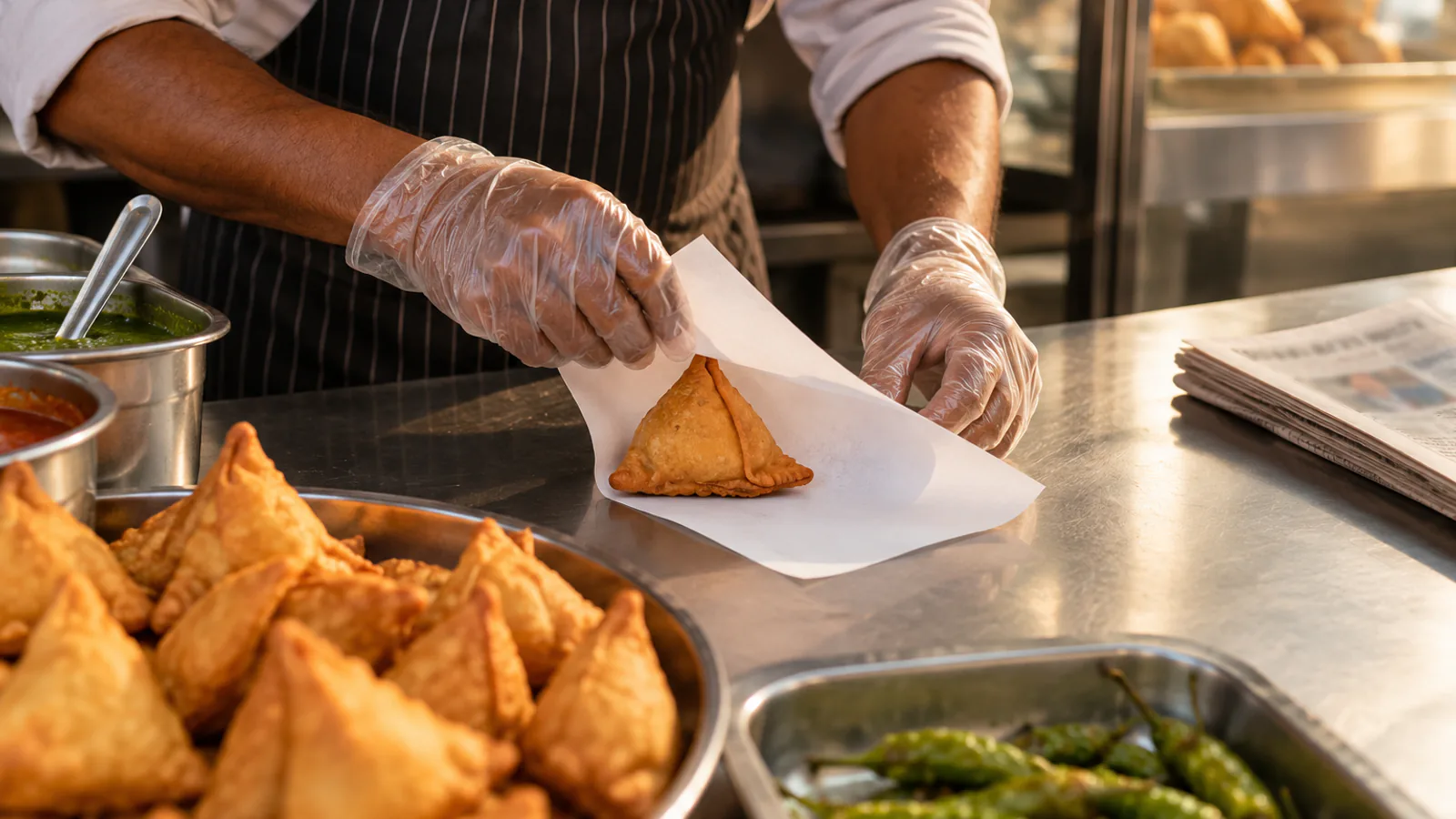
The rule predates the 2026 news
Regulation 3(11) of the Food Safety and Standards Packaging Regulations, 2018 says newspaper or any similar material shall not be used for storing and wrapping food. The wording applies to a newspaper sheet used as a direct food wrap or food storage surface. Do not treat an old habit as an exemption.
In June 2026, the FSSAI Western Region directed food business operators to stop packing or serving food in newspaper. The direction repeated the need for approved food-grade packaging. The reported action reinforced the existing regulation. The rule was not created for the first time in June 2026.
Newspaper is printed for reading, not specified as food packaging. FSSAI separately requires food-package printing inks to conform to IS 15495 and bars the printed surface of packaging from direct food contact. A sheet of newsprint has no documented food-contact role merely because the sheet feels like paper.
Find every contact point at the counter
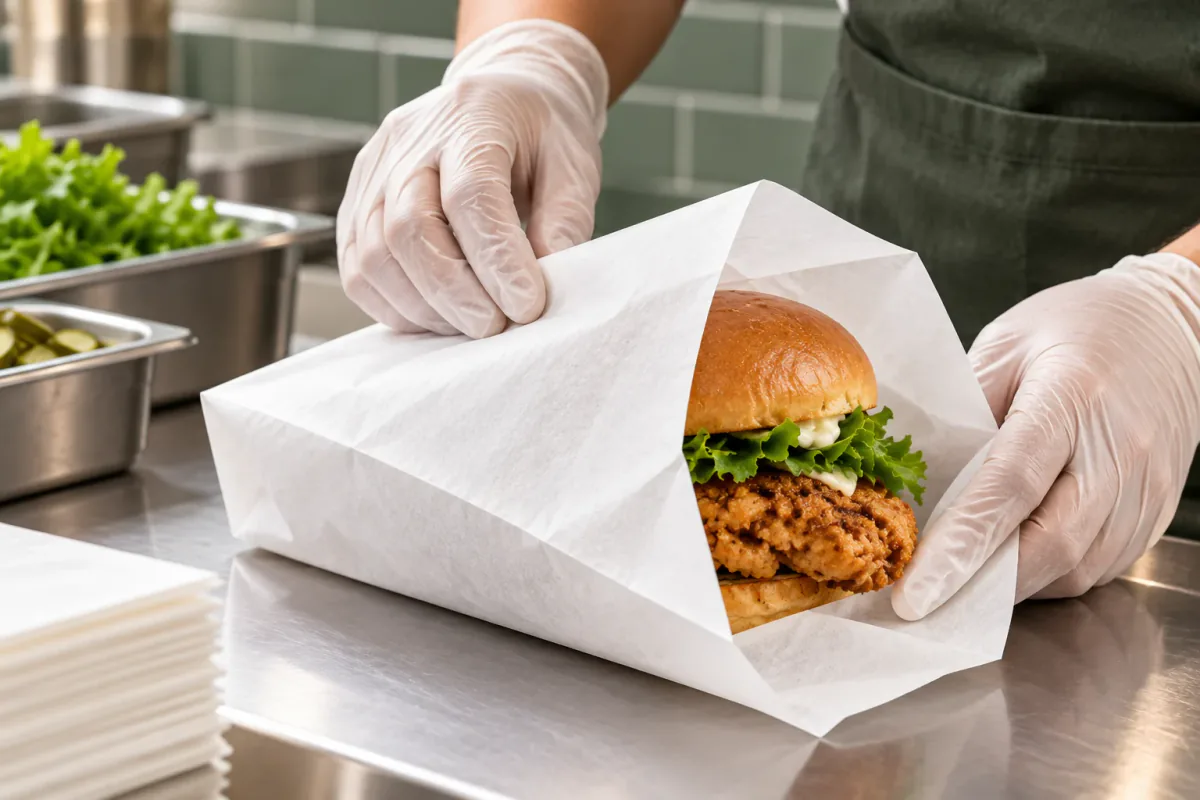
Walk the service path from cooking to handoff. Check the paper under a fried snack, the sheet around a roti, the liner inside a takeaway bag and the surface holding sweets in a box. A newspaper page under food still creates food contact even when the vendor folds the food into another shape later.
Check the rush hour as well as a quiet service. A counter often returns to newspaper when the usual roll runs out. Store the approved candidate paper beside the serving station, and set a reorder point before stock reaches zero. Keep old newspaper away from the food bench.
For an outer carry bag or carton, confirm whether the food remains completely inside a suitable primary wrap. If food might touch the outer layer during filling or service, include the outer surface in the contact review. A separate clean liner makes the contact path easier to control.
Choose a replacement by the food
For oily pakora, samosa or a burger, compare grease-resistant paper. Our white and brown OGR ranges are built for oily wrapping. Use a sample under the actual food for the full service and delivery time. Look for oil marks, leaks and tearing at the folds.
For a dry bakery item, assess a light food-contact sheet. Butter paper offers roll and pre-cut sheet formats for lining and light wrapping. The best choice depends on heat, moisture and the exact item. A silicone-coated oven sheet has a separate heat rating, while a cold counter wrap needs a separate contact assessment.
For a box, specify the surface touching the food. An outer kraft box and an inner food liner perform different jobs. Do not assume an attractive brown board is approved for direct contact. Our standard kraft grade is listed for industrial wrapping, not direct food contact.
Ask for evidence before the switch
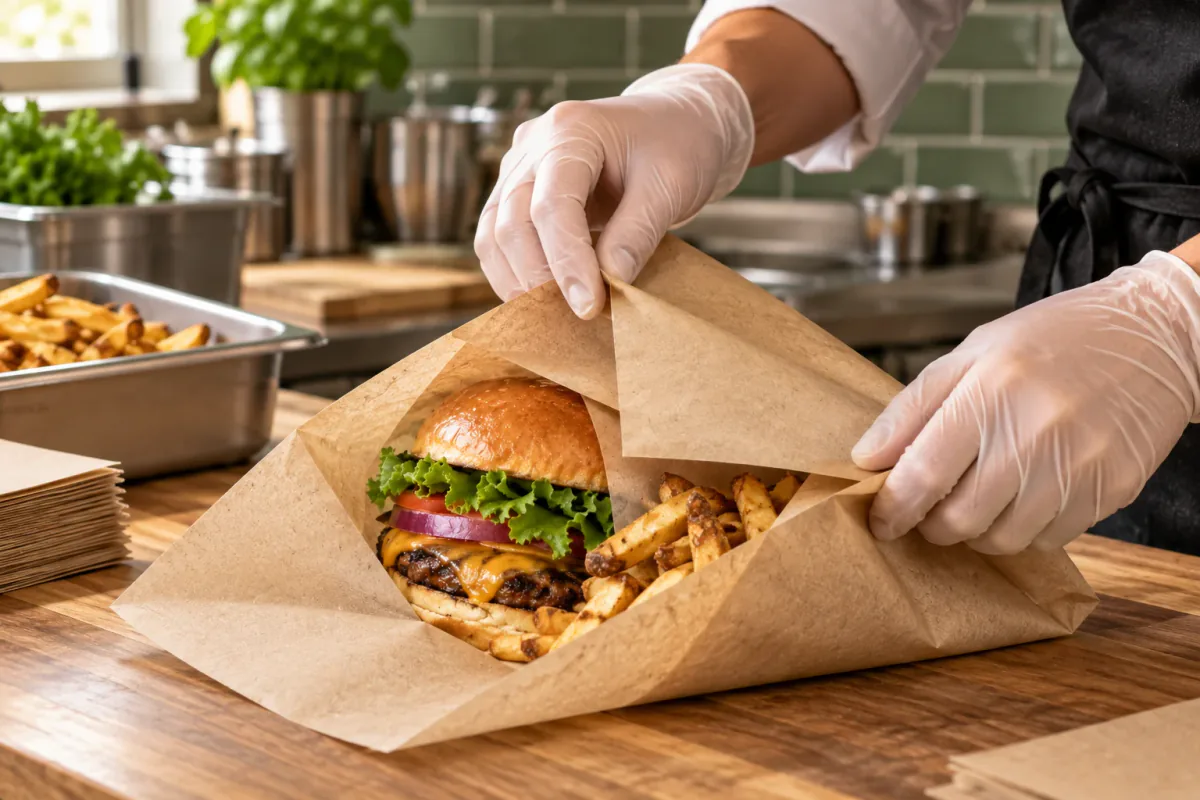
The FSSAI rules require food-grade direct-contact paper free from contaminants. They also require a NABL-accredited certificate of conformity for direct-contact packaging. Ask the supplier for the exact grade, GSM, treatment, contact side and documentation tied to the construction you plan to buy.
We do not publish a batch certificate for the KEIKO range today. Send us your food type, contact time, heat and format requirements. Ask what documents are available before you approve the replacement for direct food contact. A visual sample helps you assess handling but does not replace the required evidence.
Make the new practice repeatable
Write one short packing instruction for each food family. Put the specified paper at the point of use, label the storage shelf outside the food area, and brief the person who opens a new roll. Watch a full service to catch accidental reuse of newspaper as a tray mat.
Record the paper grade, supplier, batch and document version in the purchase file. Keep a retained sample from the approved stock. When the paper or print changes, review the new material before use. The operational change matters as much as the purchase order.
Questions
Before you specify
Was newspaper wrapping first banned in 2026?
No. The 2018 Packaging Regulations already barred newspaper for storing and wrapping food. A June 2026 direction reinforced the rule.
Does a plain brown paper replace newspaper?
Brown colour alone does not prove food-contact suitability. Ask for evidence on the exact sheet and intended food use.
Which paper suits fried food?
Start with a grease-resistant food wrap, test the candidate with your food, and request the direct-contact documents for the exact grade.