

Guides
Printing ink and food contact safety
A printed food wrap has two questions. Which ink and paper were used? Which face reaches the food after printing, folding and packing? Check both before service.
The rule for printed food packs
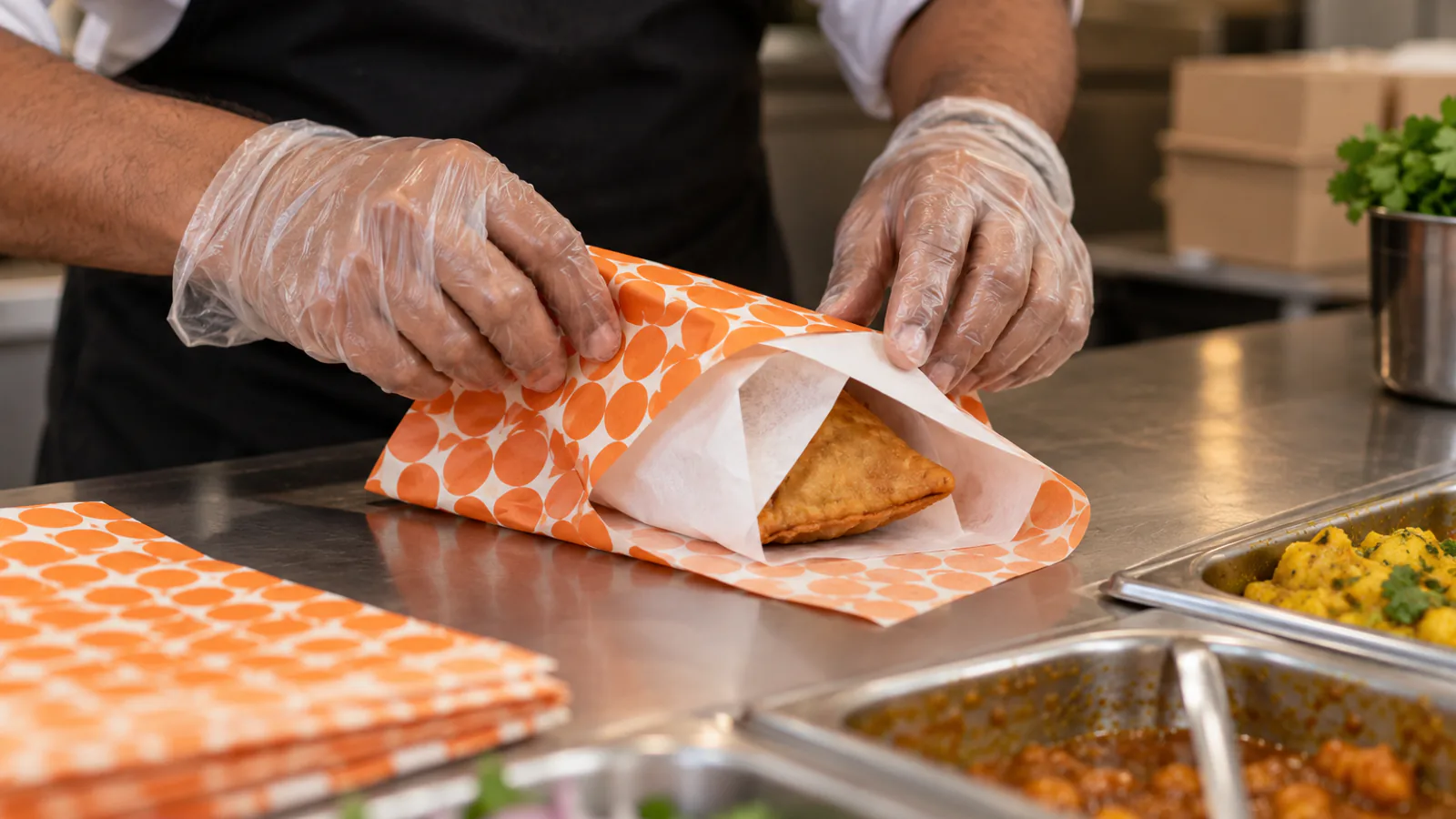
The FSSAI Packaging Regulations require printing inks used on food packages to conform to IS 15495. The printed surface of packaging must not come into direct contact with food. The two requirements work together. A supplier statement about ink alone does not permit a printed face against a sandwich or snack.
Ask the converter to mark the food-contact face and the print face on the artwork and cutting drawing. Check the fold sequence on a finished sample. Check whether a pouch fold, twist wrap or hurried service step moves an outside print inside. The final pack matters more than a flat sheet drawing.
For a multilayer pack, FSSAI requires the layer touching food, or likely to touch food, to meet the relevant material requirements. A plain inner sheet separates food from an outer printed wrap only when the inner sheet stays intact and covers every likely contact point.
Follow the food-contact surface
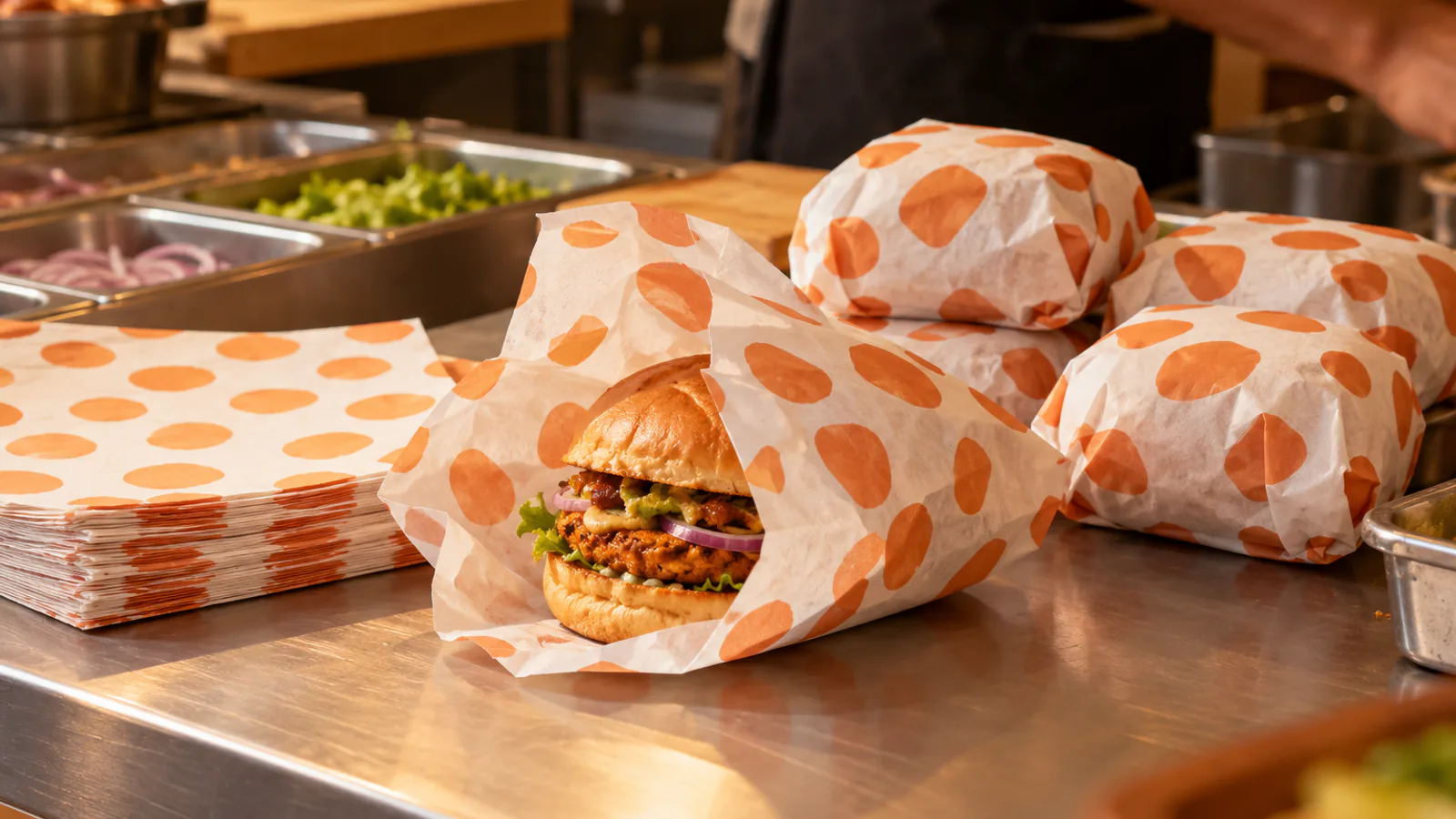
Place the actual food into the finished wrap. Watch where the food touches during filling, carrying and eating. Check corners, folds, seams and the open edge. Check for an exposed printed edge after the wrap is tightened around a burger.
If the food is oily or hot, include those conditions in the review. Oil and heat affect the demands on both the paper and the finished construction. Ask for the applicable evidence for your food, contact time and temperature. Keep the supplier statement tied to the exact print, coating and paper.
Review a separate clean tray liner for a serving basket with a printed surface. The liner needs its own food-contact evidence. Check whether the printed basket or bag ever touches the food as customers lift or shift the liner.
Check transfer during converting and storage
A printed reel is wound face against face. Cut sheets sit in stacks. Ask the converter how the printed side and food-contact side meet during drying, winding, cutting and storage. Check a delivered sample for marks or odour on the contact face.
A transfer mark is a reason to stop and ask for an investigation, not a condition to ignore because the ink originally sat outside. Keep retained samples from the printed run. Compare later deliveries against the approved print and contact-side specification.
Do not use newspaper as an emergency substitute for a printed food wrap. FSSAI separately bars newspaper for storing and wrapping food. Keep suitable plain stock at the counter when custom-printed sheets run out.
Documents to request
Ask for the base paper specification, ink standard declaration, contact-side drawing and evidence for the finished pack. For material in direct contact with food, FSSAI requires a certificate of conformity from a NABL accredited laboratory. Match the material and construction named on the document to your order.
We do not publish an ink-compliance certificate or batch food-contact certificate for KEIKO stock. Our printed-food-wrap page discusses the application, but the converter and buyer still need to verify their exact final pack. Send the intended print position, food and service conditions with your enquiry.
Run a finished-wrap trial
Fold and fill samples on the real packing line. Observe whether the printed surface reaches food at any stage. Hold the packed food for the normal delivery interval. Check for odour, visible transfer, oil leaks and loss of the inner liner.
Write down the approved artwork version, paper grade, GSM, ink specification and contact-side orientation. If the printer changes the design, ink, coating or folding method, repeat the review. The production specification should describe the finished article a customer receives.
Questions
Before you specify
Does food-safe ink permit print against food?
No. FSSAI requires the printed surface to stay out of direct food contact, alongside the ink standard requirement.
What if the print sits outside the wrap?
Check the finished folds, seams and storage. Ask for evidence on the final construction and confirm the printed face stays away from food.
Is newspaper a safe printed wrap?
No. FSSAI bars newspaper for storing and wrapping food.