

Guides
Is kraft paper food safe?
Some kraft constructions suit food packaging. Brown colour and strength alone prove nothing. Our standard kraft grade is for industrial wrapping, so use a documented food-contact liner where food touches the pack.
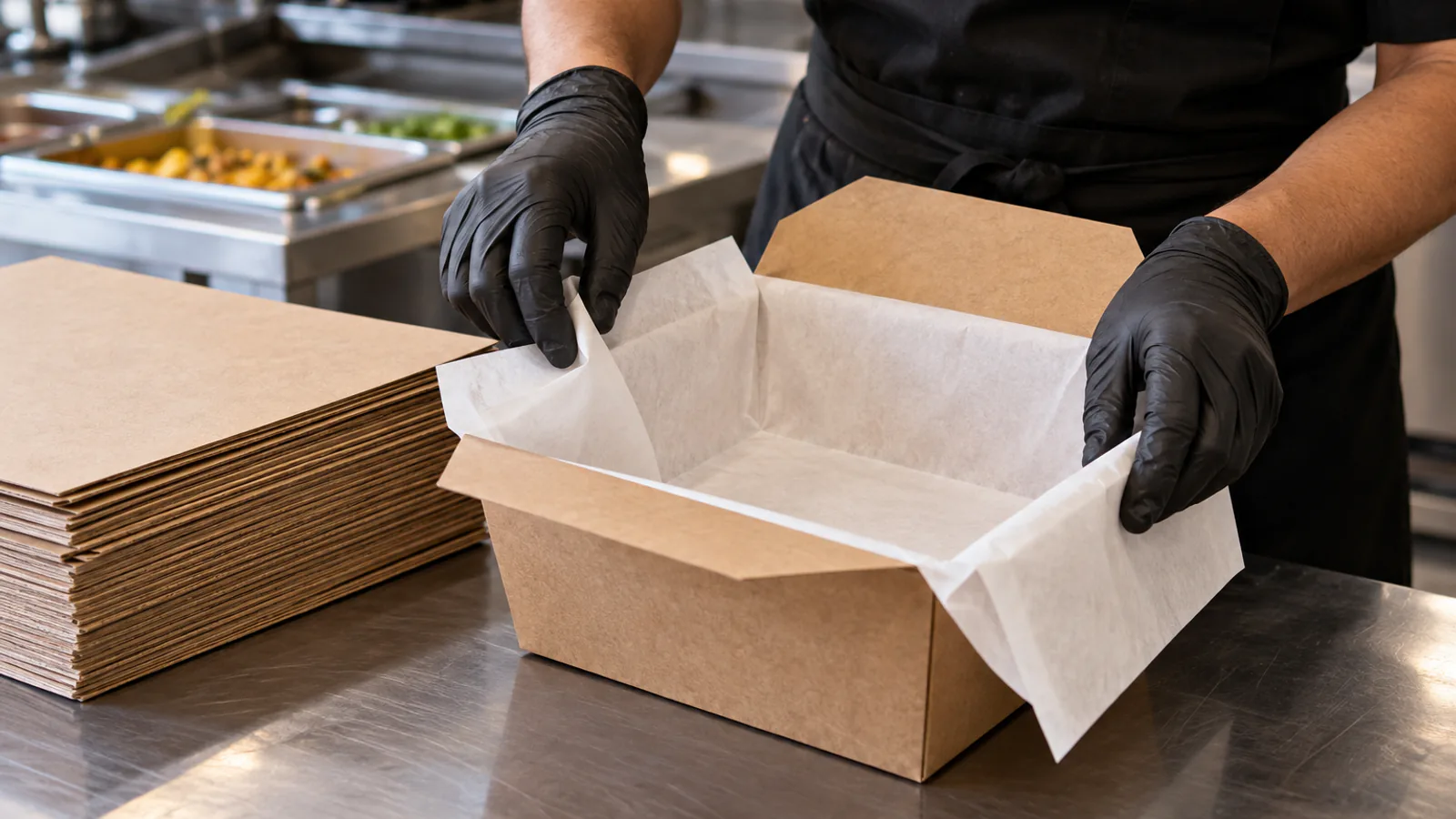
Kraft is a paper family, not a safety mark
Kraft describes a strong paper made for handling. A brown sheet looks familiar in food bags and takeaway boxes, but appearance does not tell you what touches the food. A specific kraft construction needs evidence for the intended contact, whether the use is dry, oily, wet or hot.
FSSAI says paper intended for direct food contact must be food grade and free from contaminants. The rules also call for a NABL-accredited certificate of conformity for the material touching food. Ask for the final material description, treatment and certificate. Do not infer compliance from a kraft name or a brown colour.
The KEIKO standard kraft grade page says no direct food contact. We position the grade for industrial wrapping and packing. The bleached kraft page says ask us before food use. Until you receive evidence on an exact grade and construction, keep those grades in an outer-packaging role.
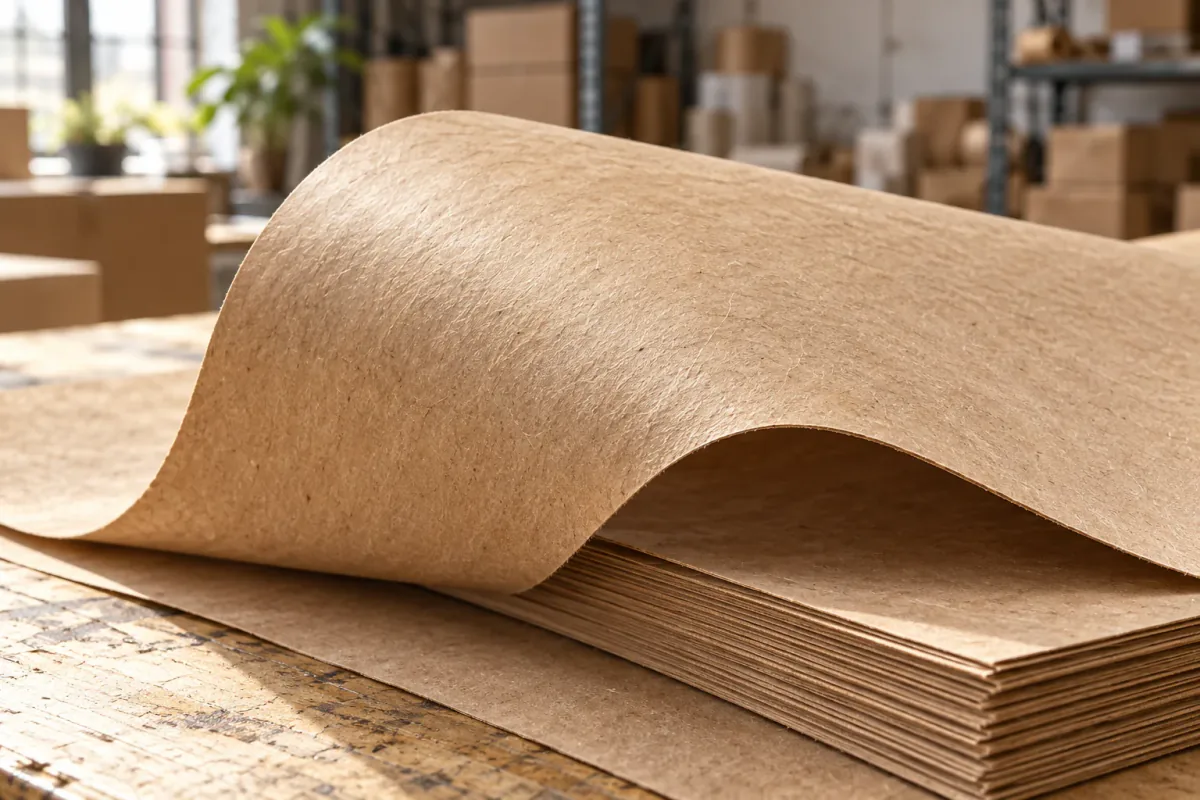
Separate outer strength from the inner contact face
A kraft carton protects a product during handling. A separate inner sheet touches the food. FSSAI distinguishes primary packaging from secondary packaging by direct contact. Draw the finished pack as layers and mark every surface likely to touch food during filling, transport and service.
For a dry sweet box, check the liner under and beside the sweets. For a fried snack, check oil transfer through folds and seams. For a bakery tray, check whether the liner stays in place when food is lifted. A gap in the liner changes the contact surface.
A clean white liner is a practical way to separate an outer kraft structure from food, but the liner itself needs a suitable specification and evidence. If food slides behind the liner, assess the exposed outer board as a likely contact layer too.
Bleached kraft needs the same check
Bleaching changes the shade. White colour does not establish food-contact suitability. The KEIKO bleached kraft page asks buyers to check before food use, since no direct-contact status was confirmed for the range. Do not replace a documented inner food liner with bleached kraft on the strength of appearance.
If a supplier offers a food-contact bleached kraft, ask for the exact grade, treatment and intended conditions. Review the final sheet, not a general family brochure. Heat, oil, moisture, printing and adhesives all belong in the purchase brief.
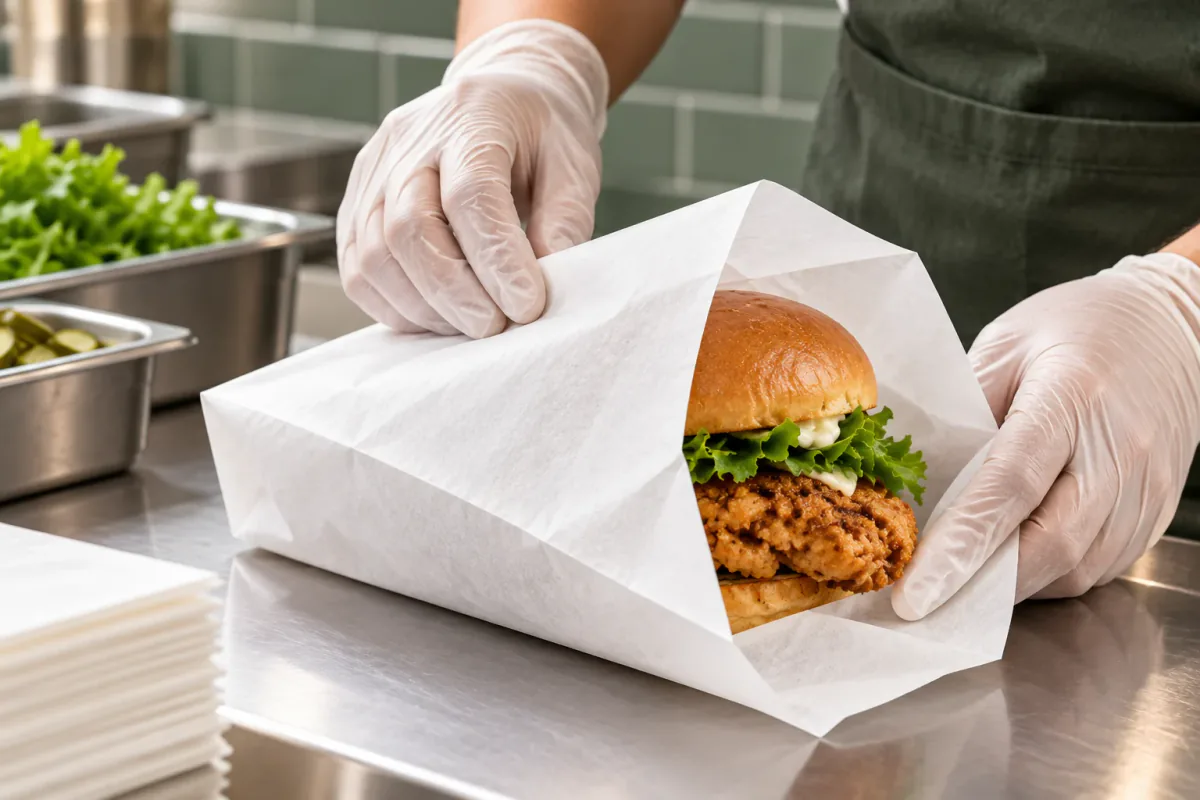
Do not confuse strength with grease resistance
Kraft gives handling strength, while OGR is selected for oil and grease resistance. A strong kraft sheet without a suitable barrier darkens or leaks under fried food. Put your food on the candidate material for the full service and delivery interval. Look at the outside of the pack as well as the contact face.
Our white and brown OGR ranges are the starting point for oily direct-contact wraps. Butter paper serves lining and light wraps. Those applications do not replace a laboratory document. Request the certificate for the chosen direct-contact construction before approval.
Five questions for your supplier
Ask which face touches food and whether the supplier tested the final construction. Ask what food and temperature the evidence covers. Ask whether the sheet includes recycled fibre, coating, wax, ink or adhesive. Ask for the applicable standard and a NABL-accredited certificate of conformity.
Then ask for samples in the intended GSM and size. Run a packing trial with your actual food, including transport. Record grease spots, odour, tearing and colour transfer. Keep the sample and document version together so a future paper change starts a fresh review.
Questions
Before you specify
Is ordinary brown kraft safe against food?
Brown colour gives no direct-contact assurance. Our standard kraft grade is not specified for direct food contact. Ask for evidence on any alternative grade.
Does bleached kraft count as food grade?
White colour does not decide food-contact suitability. Our bleached kraft range asks you to check before food use.
What lines a kraft takeaway box?
Choose an inner food-contact paper matched to the food, then review the full box construction and the direct-contact evidence.