

Guides
Is butter paper food safe?
Our butter-paper range is sold for food use, but the paper type and job still matter. Check direct contact, heat, moisture and the evidence for your exact order.
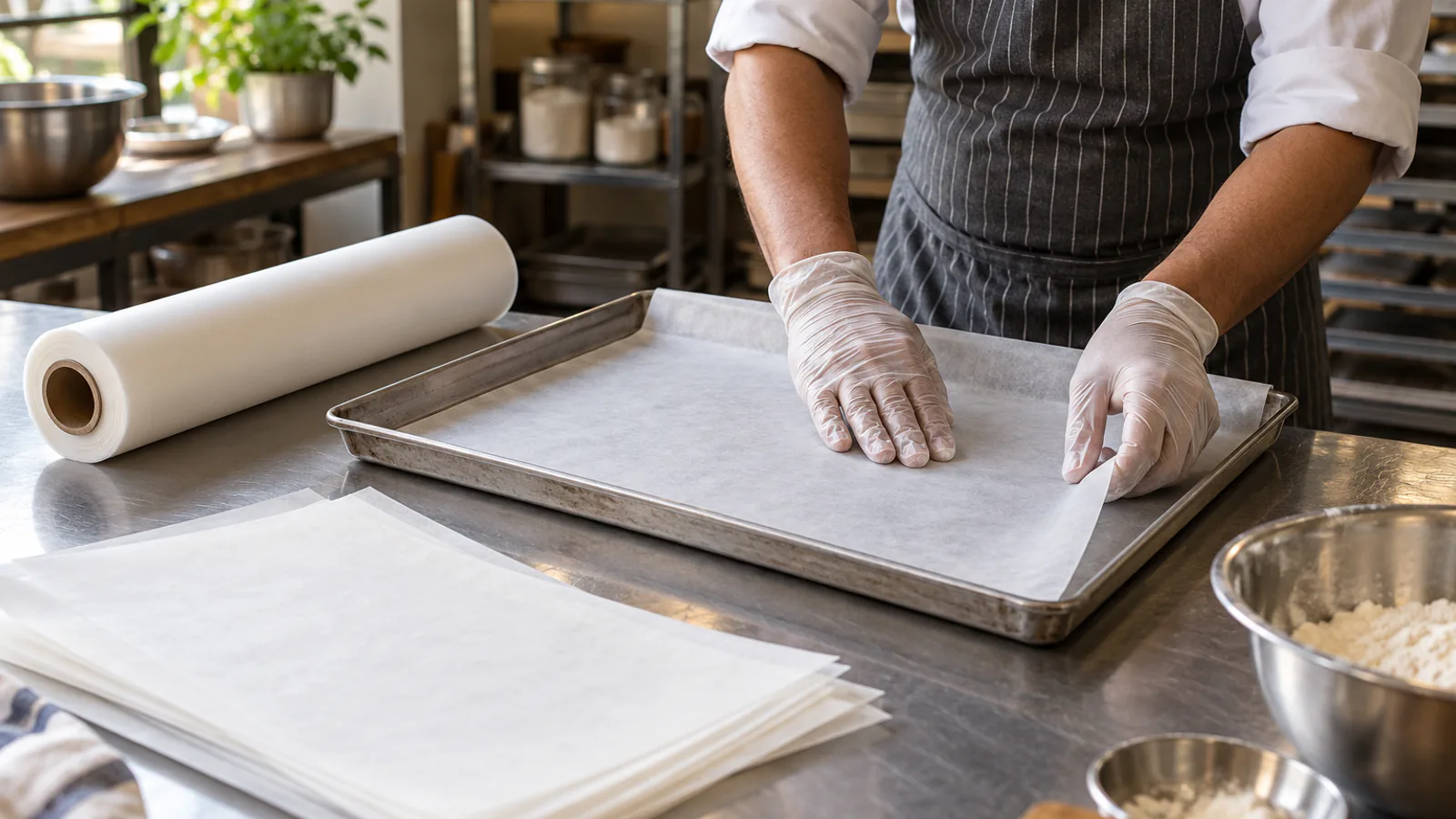
The short answer
KEIKO lists its three butter-paper types as food-grade stock. Food-grade means safe and suitable for an intended use under the FSSAI packaging definition. The statement does not mean every type suits every food process. Name the food, contact time and temperature before you order.
For a cold counter wrap, a tray liner and an oven bake, you need different performance checks. A sheet might release a cookie cleanly yet lack an oven rating. A sheet might hold a cool sandwich yet soften against wet filling. Match the paper to your real job.
Three types under one name
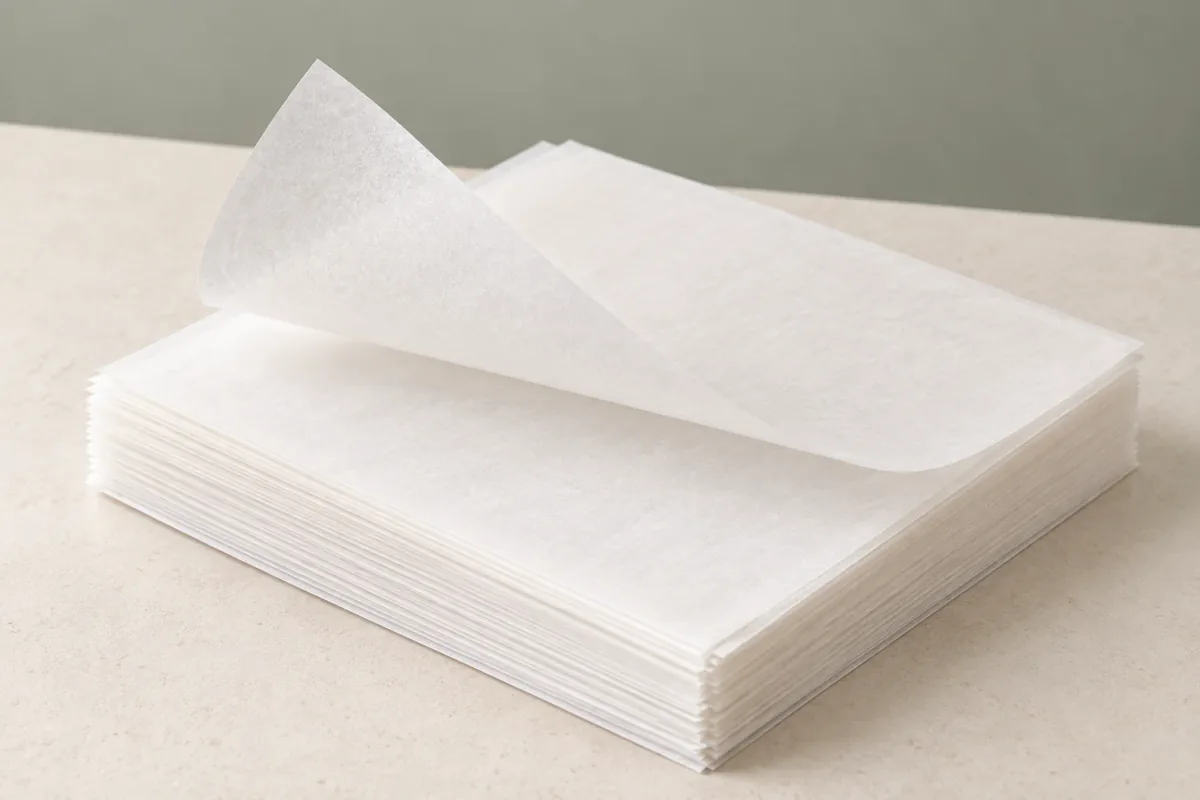
Indian buyers use butter paper as a broad name. KEIKO supplies silicone-coated, vegetable parchment and greaseproof uncoated types in the bulk roll and sheet range. The coating or treatment changes how the surface behaves. Ask for the type in writing rather than relying on the shop name.
The silicone-coated type has a release surface. The owner supplied a 230 °C heat rating for the bulk silicone-coated stock and all eight KEIKOwrap retail rolls. We do not publish an oven rating for vegetable parchment or greaseproof uncoated stock. Keep those two types out of an oven purchase specification until you receive suitable evidence.
All three types share food applications, but their suitability still belongs to a defined use. A 230 °C oven rating does not replace a food-contact certificate. A food-contact claim does not replace the temperature rating. Keep both questions on the order sheet.
Wrapping warm and oily food
Warm roti, a dry bakery snack and a fried samosa are different contacts. For a roti wrap, check steam, contact time and whether the paper tears when folded. For oily food, check whether fat darkens through or escapes at the fold.
Our OGR grade is the starting point for oily wraps. Butter paper fits light wrapping and separation. A product trial helps you compare the two grades for your food. If the wrap touches food directly, ask for the documents covering the chosen grade and final construction.
Keep any printed side away from food. FSSAI requires food-package inks to conform to IS 15495 and bars direct contact between printed surfaces and food. If your butter-paper wrap carries a print, ask which face stays inside after folding and packing.
Ovens and other heat
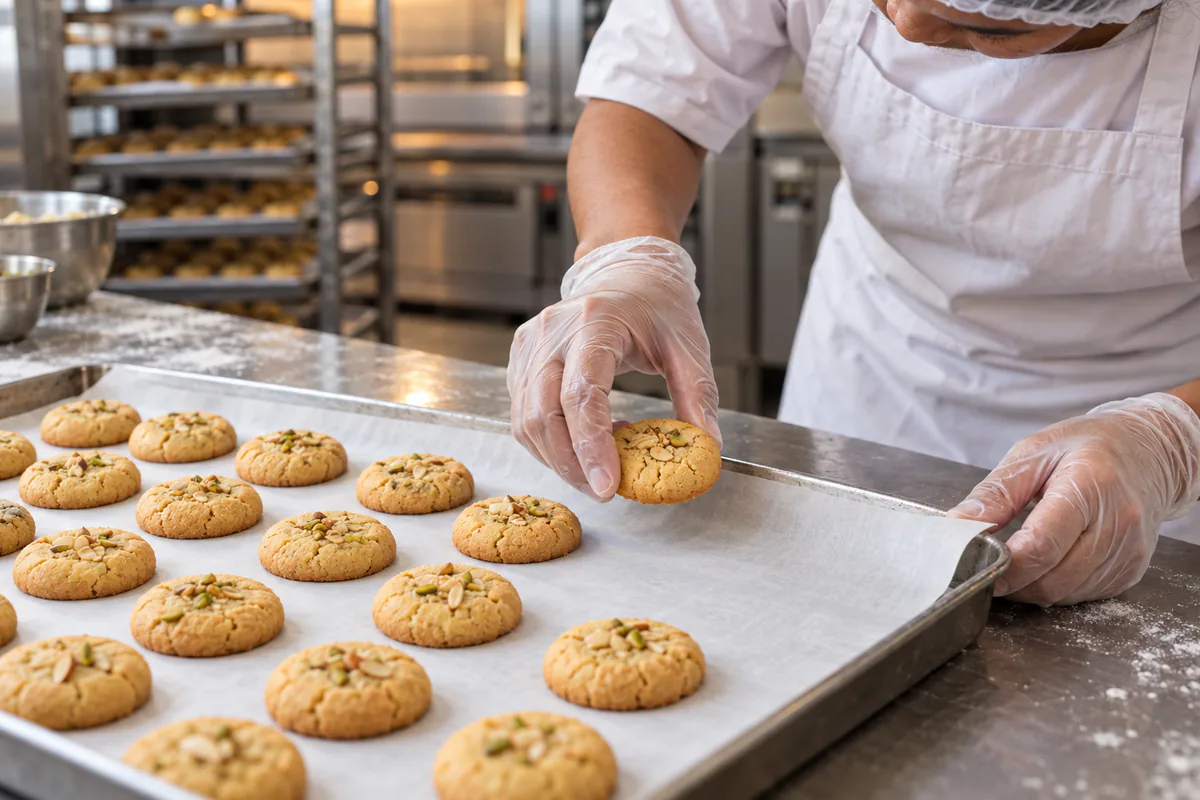
Specify the silicone-coated type for an oven job and keep the temperature at or below the stated 230 °C rating. Keep the sheet below the food and away from an exposed heating element or flame. Secure loose edges so airflow cannot lift the sheet into the heat source.
An air fryer moves air fast. Put the paper under the food after preheating, with no loose sheet in an empty basket. For microwave, steaming or freezer use, we have no KEIKO test result to publish. Do not infer those uses from the oven rating.
What a food business should check
FSSAI requires direct-contact paper to be food grade and free from contaminants. The Packaging Regulations also call for a certificate of conformity from a NABL accredited laboratory for direct-contact material. Ask for a document identifying the exact paper type, coating and finished construction you intend to use.
We have no batch certificate or migration report published for KEIKO butter paper today. A buyer needing a documented direct-contact approval should request the specific document before approving an order. Send your food, time, temperature, format and intended contact side with the request.
A useful sample trial
Request two or three candidate sheets in the intended GSM and format. Wrap or line your real product. Observe release, tearing, grease marks, smell and visible transfer at the end of your normal contact time. Test after transport as well as at the packing bench.
Record the paper type and sample batch beside the result. If the final order changes coating, GSM, print or supplier source, repeat the review. A clean handling trial supports product selection, while a laboratory document answers the separate regulatory question.
Questions
Before you specify
Is all butter paper safe in an oven?
No oven rating is published for our vegetable parchment or greaseproof uncoated types. Our silicone-coated type carries a 230 °C rating.
Is butter paper safe around warm food?
Suitability depends on the exact paper and contact conditions. Tell us the food temperature and contact time, then request evidence for the chosen grade.
Does food-grade mean a certificate exists?
No. Ask for the certificate covering the exact material. We do not publish a batch food-contact certificate for our range today.