

Guides
Is recycled paper safe for food?
Recycled describes the fibre source. Food-contact suitability belongs to the finished sheet and its intended use. Ask for evidence before a recycled surface touches food.
The short answer
A recycled label alone does not establish food-contact safety. Recovered paper passes through a collection and sorting stream. The finished sheet needs to meet the food-contact requirements for its actual job. Equally, the fibre source alone does not prove a finished product unsafe. Ask for evidence on the exact material.
In India, FSSAI requires paper intended for direct contact to be food grade and free from contaminants. Food-grade means suitable and safe for the intended use. The rules also require a NABL-accredited certificate of conformity for material touching food or likely to touch food. A marketing recycling symbol is not the document.
Start by identifying direct contact. An outer recycled carton with a separate inner food liner has a different contact path from a recycled sheet wrapped around a hot snack. Check whether food touches the outer carton during filling, delivery or service.
Why the input stream matters
The German Federal Institute for Risk Assessment notes a possible path from recovered fibre to substances from printing inks and adhesives. Its paper recommendation calls for careful recovered-paper selection, suitable cleaning and checks for possible migration into food. The recommendation provides technical context, not an Indian approval for any KEIKO product.
Ask the supplier what grades of recovered fibre enter the finished sheet and which processes control unwanted substances. Ask how the contact surface is tested after coating, printing and converting. A certificate covering a different paper source or construction gives an incomplete answer for your order.
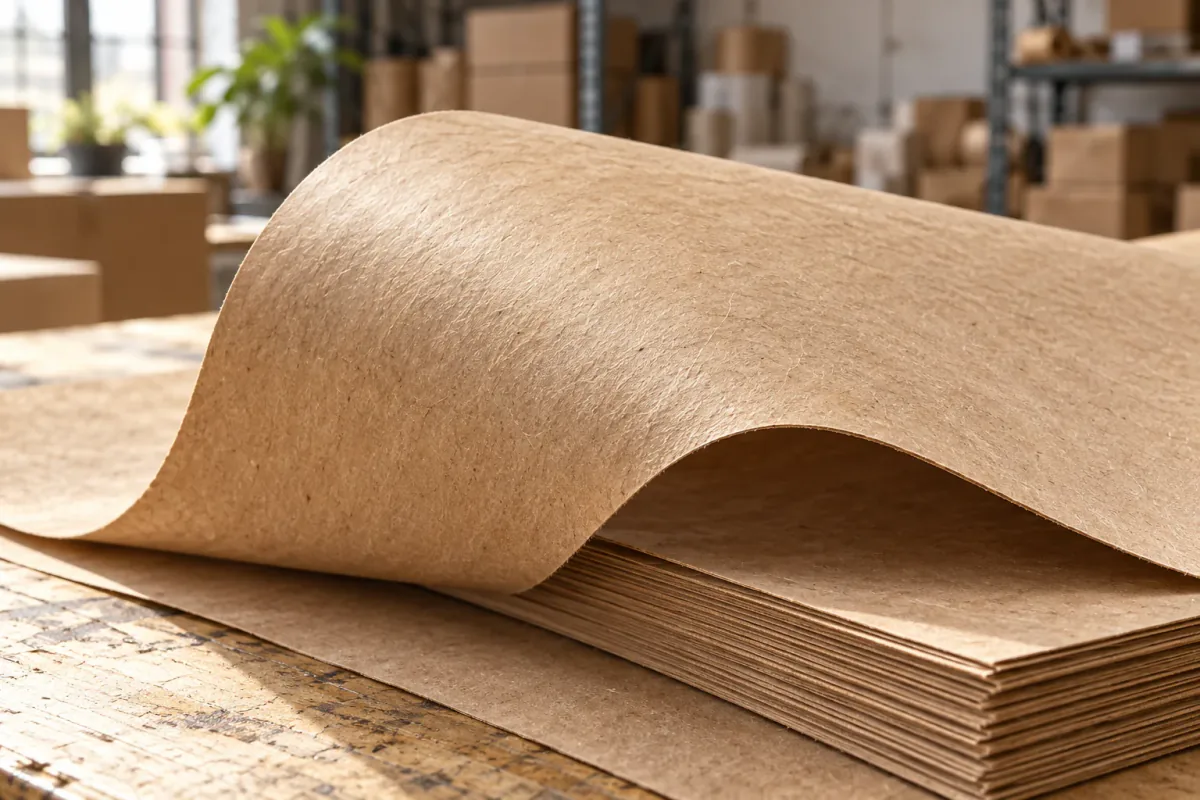
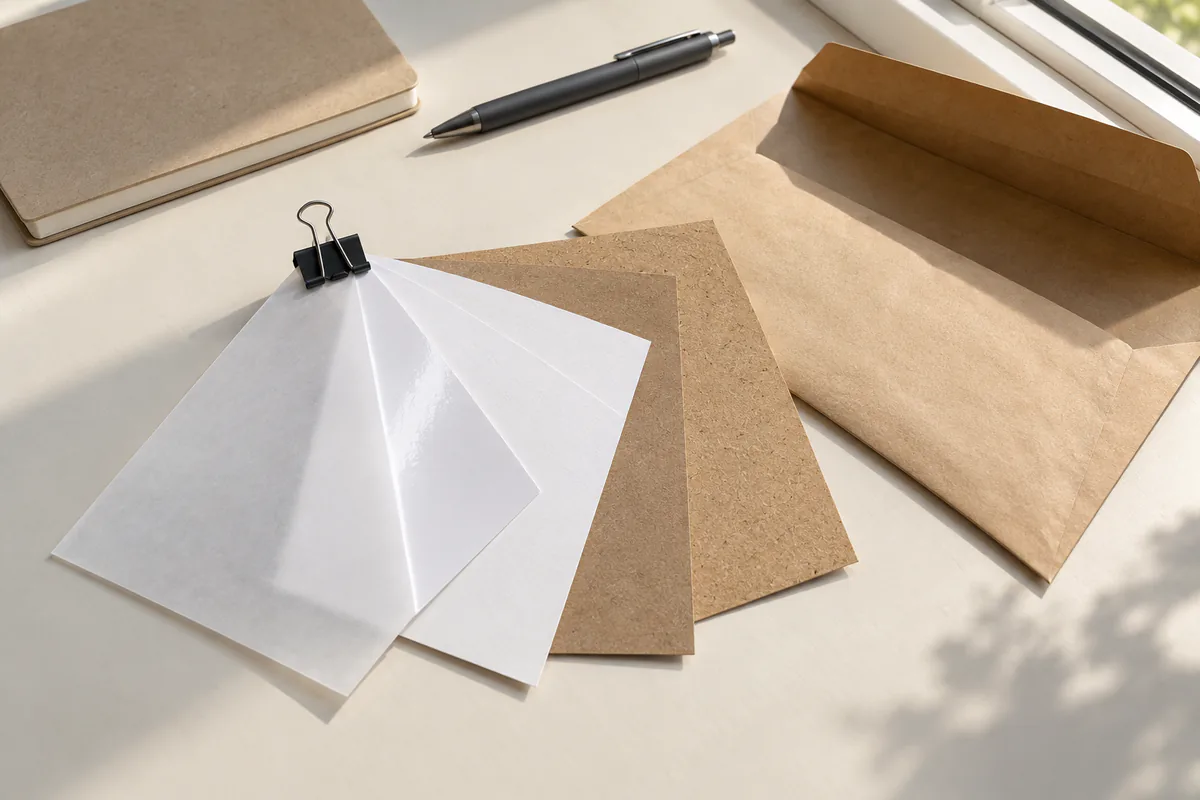
Do not assume a white surface uses virgin fibre or a brown surface uses recycled fibre. Neither shade answers the sourcing question. Request the material composition from the supplier and keep the statement with the purchase specification.
Understand an inner liner or barrier
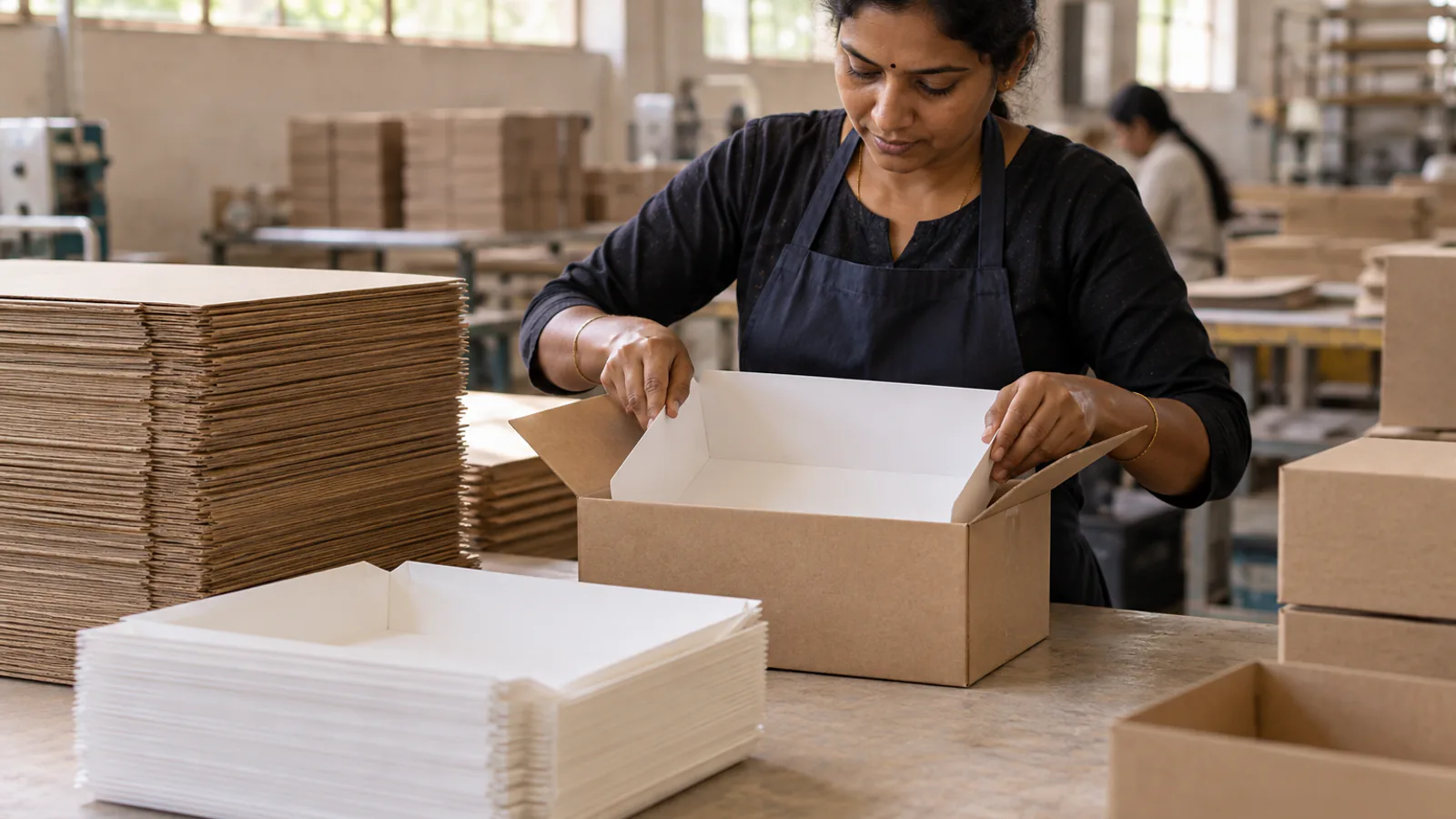
A separate inner food-contact liner places the recycled board in a secondary role only when the liner prevents food contact with the board. The liner must cover the food throughout filling, carrying and serving. FSSAI requires a layer likely to touch food in a multilayer pack to meet the material requirements, even if the layer is usually hidden.
Draw the pack in cross-section and mark each contact point. Look for uncovered seams, cut edges, corner folds and an open top. Test the assembled pack with the real food. If a liner slips or tears, the outer board might become a contact surface.
A coating or plastic film is another construction, not automatic proof of safety. Ask which side touches the food and request evidence for the final assembly. Do not borrow a migration number from a plastic regulation and apply the number to bare paper.
Questions before you buy
Tell the supplier your food type, fat and moisture level, temperature and contact time. State whether the sheet is a primary wrap, an inner liner or an outer box. Ask for the fibre-source description, final material specification, applicable standard and direct-contact certificate where required.
Keep the approved sample, test report and certificate together. Check the document date, laboratory, material name and stated use conditions. A switch to another recycled input stream, coating, ink or mill requires a new review before you treat the replacement as equivalent.
We do not publish a recycled-fibre declaration or batch food-contact certificate for KEIKO stock. Our standard kraft is listed for industrial wrapping and not direct food contact. For a food job, ask us which documented candidate paper is available, and decide only after reviewing the evidence.
Questions
Before you specify
Does recycled mean unsafe for food?
Fibre source alone does not decide. Review the finished paper, food-contact conditions and supporting evidence.
Does an inner liner solve every concern?
The liner needs suitable evidence and full coverage. Check seams, folds and any outer surface likely to touch food.
Is brown paper always recycled?
No. Colour does not establish fibre source. Ask the supplier for the material composition.