

Guides
GSM vs thickness
GSM tells you how heavy a paper is. Thickness tells you how deep the sheet is. Density links the two, and density changes from grade to grade.
01 / Two measures
Weight and thickness are different measures
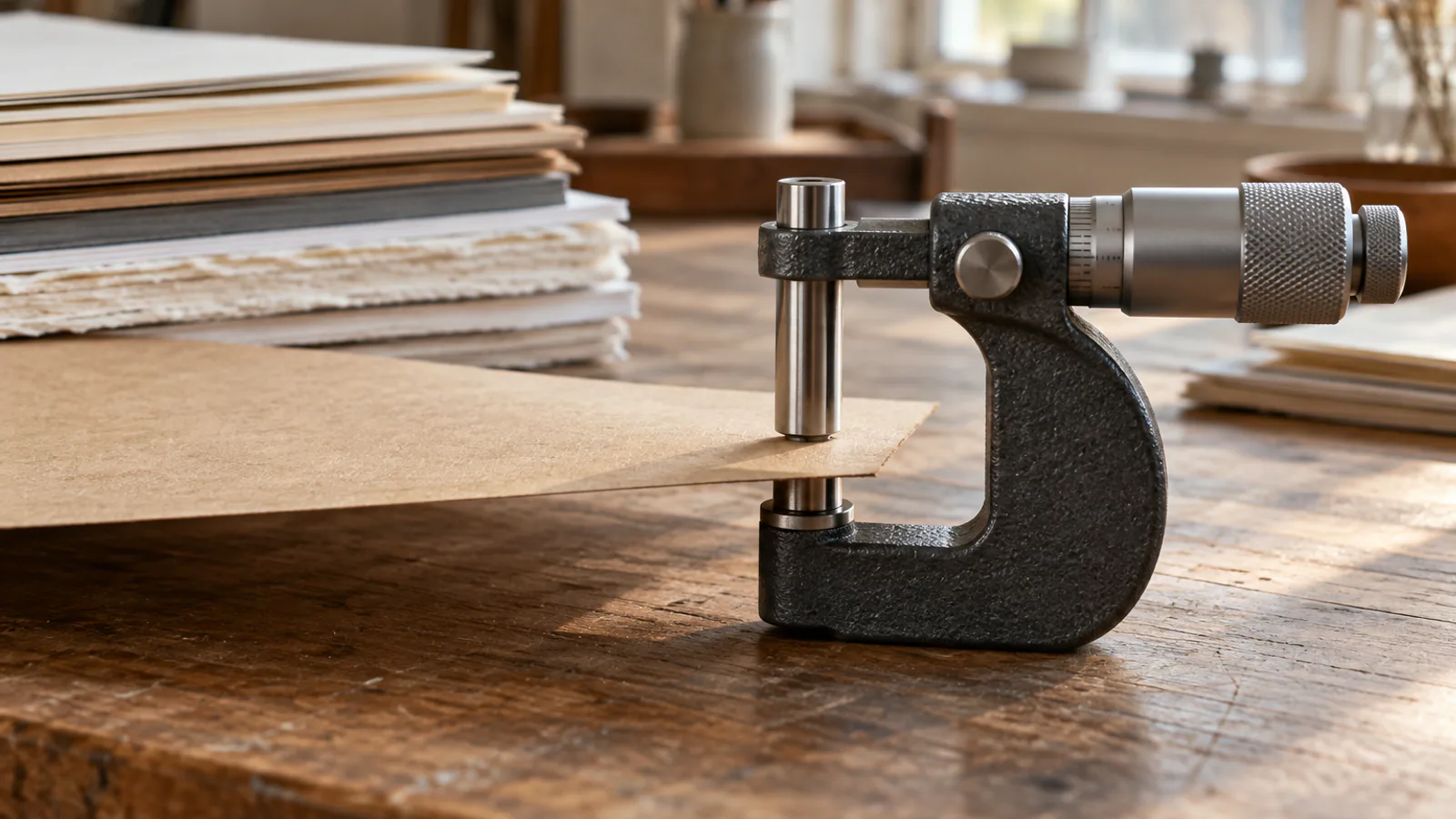
GSM, or grammage, is the weight of one square metre of paper in grams. Thickness, called caliper, is the depth of one sheet, usually in millimetres or microns.
A paper with a high GSM is heavier per square metre. The sheet is not necessarily thicker. Two papers at the same GSM differ in thickness when one is denser than the other.
02 / Density
Density links the two
Divide grammage by caliper and you get density. A dense sheet packs the same weight into less depth.
Take two papers at 80 GSM. One measures 0.10 mm thick, so its density works out at 800 kg per cubic metre. The other measures 0.08 mm, so its density works out at 1,000 kg per cubic metre. Same weight, different thickness.
This is why GSM alone does not predict how stiff, opaque or bulky a sheet feels. Feel depends on density, fibre and finish as well as weight.
03 / Why this matters
When thickness matters to a buyer
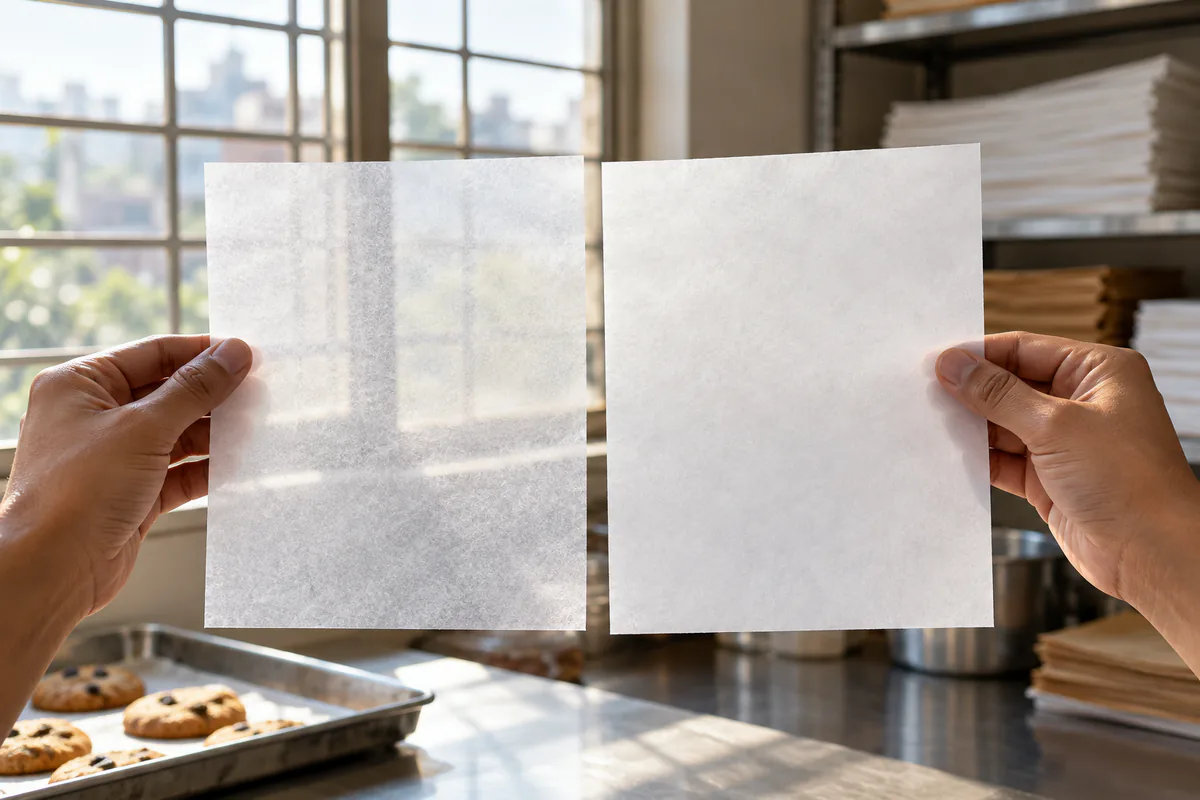
Machines feed by thickness. A converting line or a printing press set for one caliper jams or misfeeds on a sheet of a different depth, even at the same GSM.
Stacks and reels grow with thickness. A thicker sheet makes a taller ream and a wider reel diameter for the same length, which changes storage and dispenser fit.
Price follows weight. We price reels by weight, so GSM sets the cost, while thickness sets the fit on your machine.
04 / Measuring
How to measure both
To check GSM, cut a square of 10 cm by 10 cm and weigh the square on a fine scale. Multiply the grams by 100 and you have the GSM.
To check thickness, close a paper micrometer on a single sheet. Take readings at several points across the sheet and average them.
For a quick check without a micrometer, measure the height of a ream of 500 sheets and divide by 500.
05 / Specifying
What to put on your specification
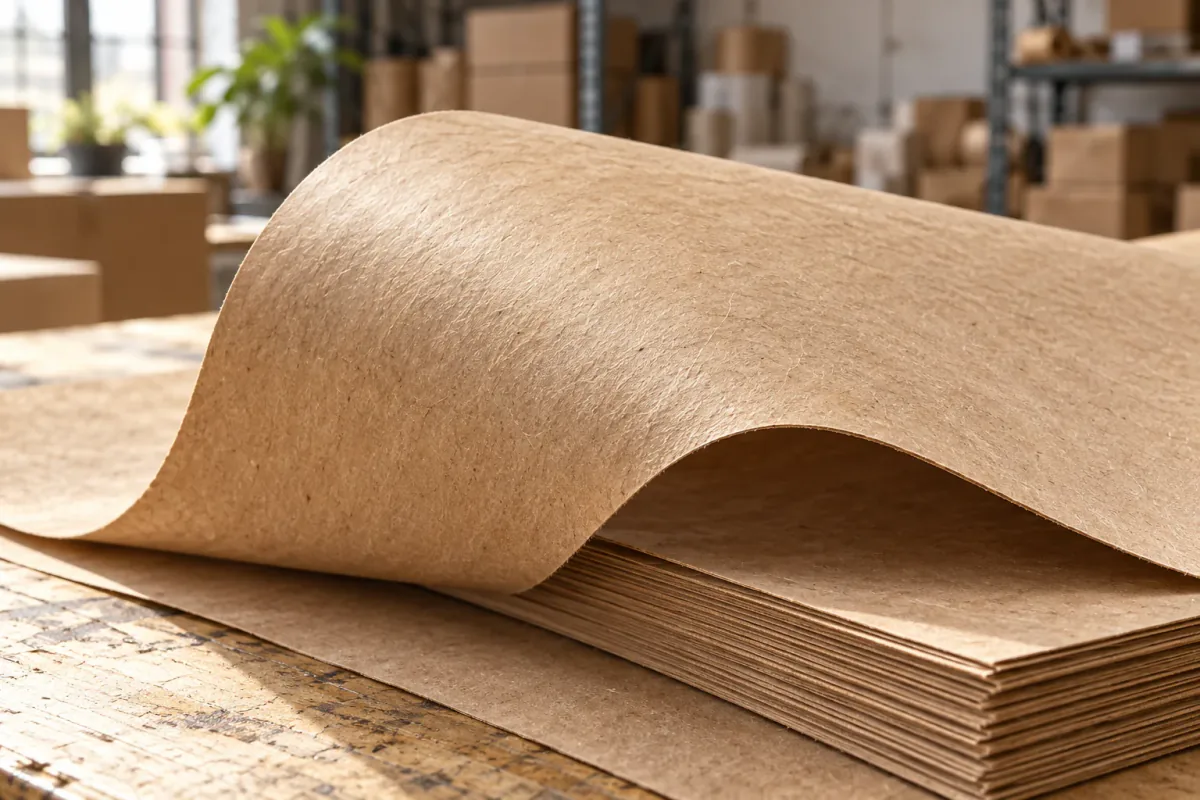
Specify GSM first. We quote every grade in GSM: butter paper 35 to 50, OGR 35 to 70, MG and MF 40 to 80, kraft 60 to 120.
Add a thickness figure when your machine needs one. We do not publish caliper values yet, so ask for a sample and measure the sample on your own equipment.
Record both numbers on your specification sheet, and check deliveries against them.
06 / Our grades
Weight across our grades
Our lightest grade, butter paper, runs from 35 to 50 GSM. OGR runs 35 to 70, MG and MF 40 to 80, and kraft 60 to 120.
Within one grade, a higher GSM usually gives a thicker sheet, since the fibre and finish stay the same. Across grades, compare thickness on samples, not on GSM.
Questions
Before you specify
Does a higher GSM mean thicker paper?
Not always. A higher GSM means more weight per square metre. A dense sheet carries more weight in less depth.
How do I convert GSM to thickness?
You need the density of the paper. Divide GSM by density to estimate caliper, or measure a sample with a micrometer.
Why does thickness matter for my machine?
Machines feed by thickness. A line set for one caliper misfeeds on a sheet of a different depth, even at the same GSM.